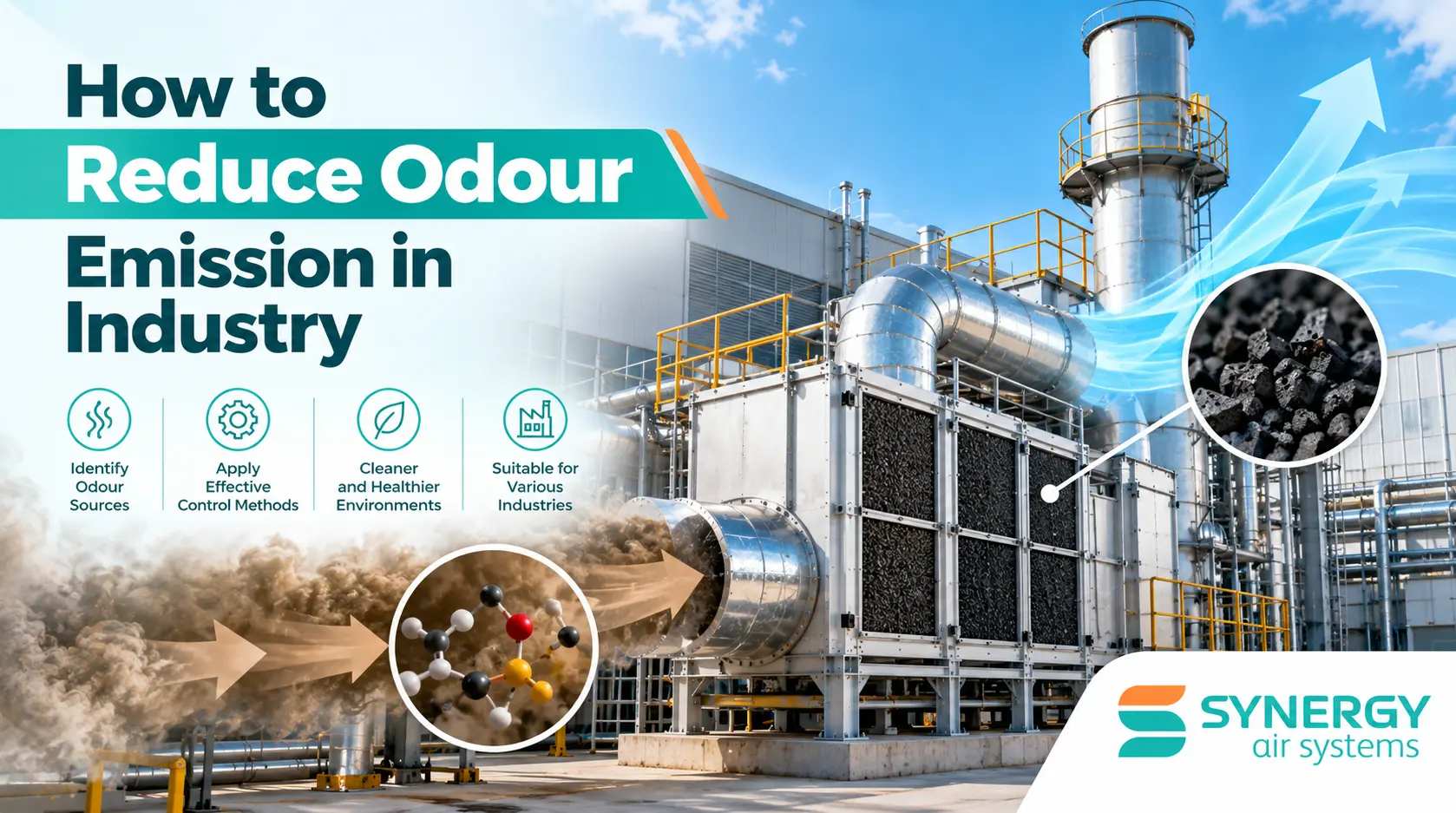
How to Reduce Odour Emission in Industry

Table of Contents
ToggleIndustrial odour emissions can affect workplace conditions, surrounding communities, and environmental performance. The most effective way to reduce industrial odours is to identify the source, capture contaminated air, and select a suitable treatment technology based on the gases present. Depending on the application, solutions may include activated carbon filtration, chemical scrubbers, biofiltration, and specialised Gas Phase Filtration systems.
Industries such as chemical manufacturing, wastewater treatment, food processing, and waste management can generate odour-causing compounds, including hydrogen sulphide (H₂S), ammonia (NH₃), and volatile organic compounds (VOCs). Because these contaminants have different chemical properties, the correct treatment depends on the composition and concentration of the exhaust air.
This guide explains the main causes of industrial odours, practical reduction methods, and how to choose an appropriate odour control system.
What Causes Odour Emissions in Industrial Facilities?
Industrial odours occur when gases and vapours released during manufacturing, processing, storage, or waste handling enter the surrounding air. Some compounds produce noticeable smells at low concentrations, while others may present health or corrosion risks that cannot be assessed reliably through smell alone.
Identifying the source and composition of the emissions is the first step towards effective industrial odour control.
Volatile Organic Compounds and Chemical Vapours
Volatile organic compounds (VOCs) are chemicals that readily evaporate into the air. They can originate from solvents, coatings, adhesives, chemical processing, cleaning operations, and other industrial activities.
Some VOCs produce strong or unpleasant odours. Depending on the compounds involved, activated carbon filtration or other suitable gas-treatment technologies can help reduce their concentrations in exhaust air.
However, not all VOCs behave identically. The filtration medium must be selected according to the specific chemicals present and the operating conditions.
Hydrogen Sulphide, Ammonia, and Other Odorous Gases
Several inorganic gases and sulphur-containing compounds are associated with industrial odours.
- Hydrogen sulphide (H₂S): A toxic gas associated with wastewater, sewage, and certain chemical processes. It has a characteristic rotten-egg odour and can contribute to corrosion.
- Ammonia (NH₃): A pungent gas generated or handled in several industrial processes, including certain refrigeration, agricultural, and chemical applications.
- Sulphur dioxide (SO₂): A reactive gas produced by certain combustion and industrial processes.
- Volatile organic compounds (VOCs): A broad group of chemicals that may contribute to solvent-like, chemical, or other process-related odours.
- Mercaptans and other sulphur compounds: Chemicals that can produce strong odours at relatively low concentrations.
Understanding which compounds are present helps determine whether the facility needs activated carbon, chemically impregnated media, a chemical scrubber, or another treatment method.
Read Also: Molecular Filtration System: Protecting Electronics & Critical Environments
How Can Industries Reduce Odour Emissions?
Reducing industrial odour emissions requires more than installing a filter. A successful strategy addresses the source of the odour, prevents contaminated air from escaping, and treats the captured exhaust using an appropriate technology.
1. Identify and Control Odour Sources
Begin by identifying the processes, equipment, tanks, and storage areas responsible for the emissions.
Potential sources include wastewater collection systems, sludge handling, chemical storage, production equipment, exhaust outlets, and organic waste processing.
Where possible, reduce odour generation at the source. Depending on the process, this may involve improving material storage, preventing stagnant wastewater conditions, controlling leaks, or modifying operating practices.
Source control can reduce the load placed on downstream treatment equipment and improve the overall effectiveness of an odour management strategy.
2. Capture and Treat Contaminated Exhaust Air
Even an effective filtration system cannot treat air that escapes before reaching the equipment.
Enclosures, local exhaust ventilation, suitable ductwork, and controlled extraction can help collect odorous air close to its source. The captured air can then be directed through an appropriate treatment system before discharge.
The design should account for airflow, pressure losses, contaminant concentration, temperature, and humidity. Poorly designed extraction or bypass around the treatment media can reduce performance even when the filtration equipment itself is suitable.
3. Maintain Equipment and Prevent Leaks
Damaged seals, leaking ducts, poorly maintained process equipment, and overflowing waste containers can contribute to persistent odour problems.
Regular inspections and preventive maintenance help identify these issues before they become significant.
Facilities should also inspect filtration housings, fans, duct connections, and media beds. Depending on the technology, maintenance may include replacing saturated media, servicing chemical dosing equipment, or maintaining biological treatment conditions.
Read Also: Gas Phase Filtration System India: How It Works & Why Industries Need It
What Technologies Are Used for Industrial Odour Control?
Different technologies remove or transform odour-causing compounds through different mechanisms. Selecting the right option requires an understanding of the contaminants, the airflow being treated, and the required treatment performance.
Activated Carbon and Gas Phase Filtration
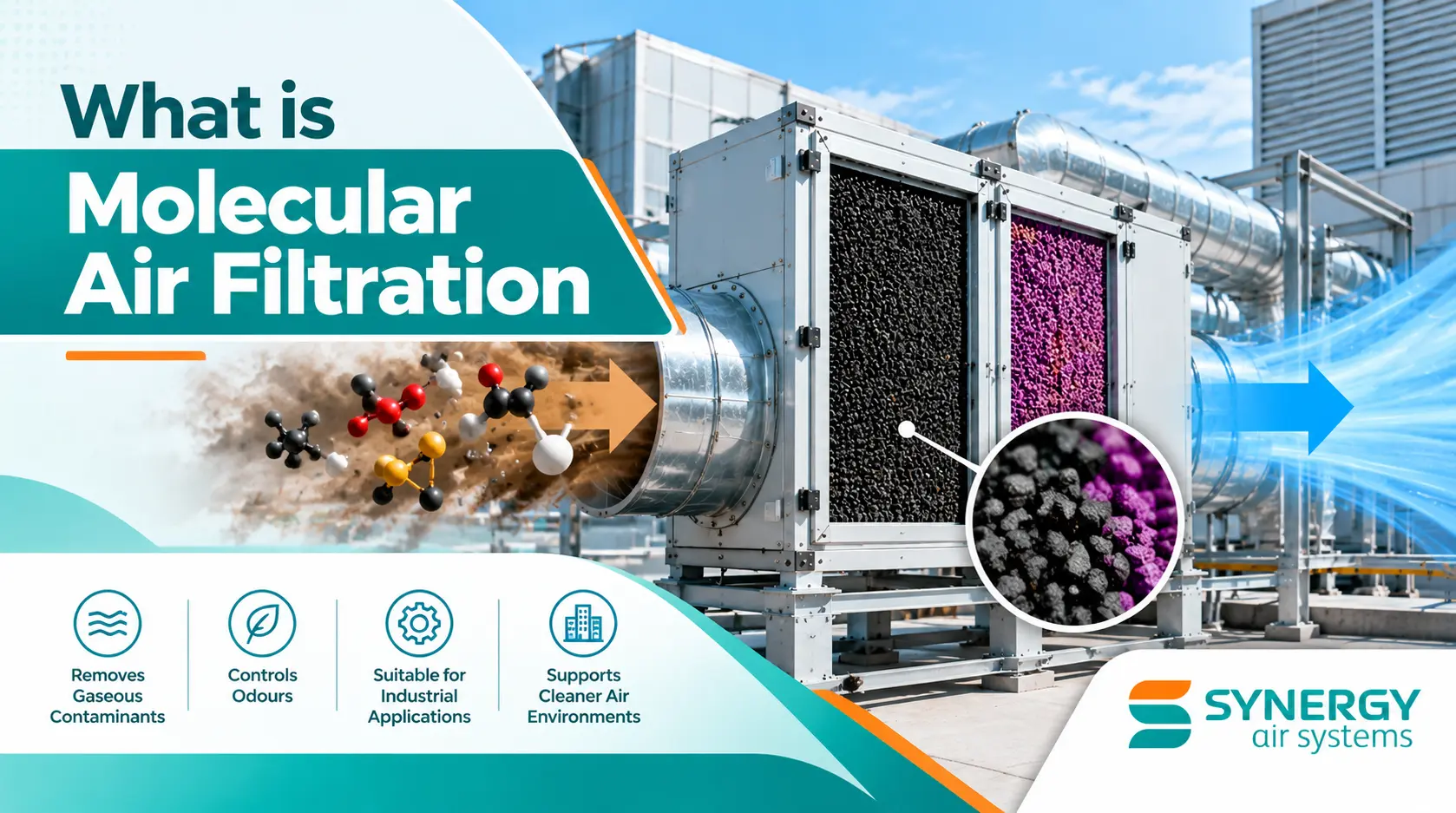
Activated carbon filtration uses a porous material with a large internal surface area to adsorb suitable gaseous contaminants.
It is commonly considered for applications involving certain VOCs, organic vapours, and odour-causing compounds. Specially impregnated carbon and other chemically reactive media can also be used for selected gases that require additional chemical interaction.
Gas Phase Filtration systems may use adsorption, chemisorption, or combinations of specialised media to treat targeted gaseous contaminants.
These systems can be useful in industrial environments where odorous or corrosive gases need to be controlled. However, media selection is critical because a filter that performs well against one gas may be unsuitable for another.
Activated carbon and other molecular filtration media are not universal solutions for every industrial odour. Their suitability depends on contaminant chemistry, concentration, humidity, temperature, airflow, and contact time.
Chemical Scrubbers and Chemical Oxidation
Chemical scrubbers treat contaminated gas streams by bringing them into contact with a suitable liquid or reactive medium. Depending on the system, contaminants may dissolve into the liquid or undergo chemical reactions.
Scrubbers can be appropriate for selected gases, including ammonia and certain acid gases. The chemical solution must be matched to the contaminants being treated.
Chemical oxidation uses an oxidising agent to transform targeted compounds into other chemical substances. It may be applied within suitable treatment systems, including certain scrubbers and reactive-media processes.
These technologies require appropriate engineering, chemical handling, monitoring, and waste management. The selection should consider the gas composition, concentration, required removal level, and operating costs.
Biofiltration for Suitable Odorous Compounds
Biofiltration uses microorganisms growing on a suitable media bed to break down biodegradable contaminants in an air stream.
It can be suitable for certain odour-control applications in wastewater treatment, organic waste processing, and other facilities where the contaminants and operating conditions support biological treatment.
Biofilters require appropriate moisture, temperature, airflow, and biological operating conditions. They may also require pretreatment if the incoming air contains excessive dust or compounds that could inhibit microbial activity.
Biofiltration is not appropriate for every gas stream, so the contaminant profile should be evaluated before selecting this technology.
How Does Gas Phase Filtration Help Control Industrial Odours?
Gas Phase Filtration targets gaseous contaminants using specialised media rather than relying solely on conventional particulate filters.
A typical system directs contaminated air through media selected to adsorb or chemically react with particular gas molecules. Depending on the application, the media may include activated carbon, impregnated carbon, oxidising media, or other chemically reactive materials.
For example, a facility experiencing odours from selected organic vapours may require a different media formulation from a facility dealing with hydrogen sulphide or ammonia.
Gas Phase Filtration can be particularly relevant where industrial emissions also create corrosion concerns for electrical equipment, control systems, and sensitive instruments.
For effective performance, the system should be designed around the actual contaminants, airflow, temperature, humidity, and required treatment objectives. Media condition and remaining capacity must also be considered during ongoing operation.
Synergy Air Systems provides Gas Phase Filtration solutions for industrial applications, including molecular filtration, chemical media systems, and specialised gas treatment equipment.
How Do You Choose the Right Industrial Odour Control System?
The most suitable industrial odour control system depends on the source of the emissions and the conditions under which the equipment must operate.
Before selecting a solution, evaluate the following factors.
Contaminant identification: Determine whether the exhaust contains H₂S, NH₃, VOCs, mercaptans, or a mixture of gases. Air sampling or other appropriate testing may be necessary when the composition is uncertain.
Contaminant concentration: Low-concentration emissions and highly concentrated process gases may require different treatment approaches. High concentrations can affect media life, treatment capacity, and safety requirements.
Airflow requirements: The equipment must handle the required airflow while providing adequate contact with the treatment medium.
Temperature and humidity: Environmental conditions can influence adsorption capacity, chemical reactions, biological activity, and media service life.
Required treatment performance: Establish the desired reduction in odour or target-gas concentration and identify any applicable workplace or environmental requirements.
Maintenance and operating costs: Consider energy consumption, media replacement, chemical usage, waste handling, monitoring, and service access.
A suitable system should be selected using these factors rather than choosing equipment based only on its initial price or general performance claims.
How Can Industries Monitor Odour Control Performance?
Installing an odour control system is only the beginning. Ongoing monitoring helps determine whether the equipment continues to operate as intended.
Useful measures include:
- Exhaust-air sampling: Test relevant contaminants at appropriate sampling points to assess treatment performance.
- Gas monitoring: Use suitable instruments to monitor target gases where continuous measurement is necessary.
- Odour assessments: Investigate persistent odour complaints and identify potential sources or changes in operating conditions.
- Media condition checks: Follow manufacturer guidance and application-specific monitoring procedures to determine when filtration media need attention.
- Preventive maintenance: Inspect fans, ducts, seals, housings, and other equipment to identify leaks or operating problems.
- Performance documentation: Record monitoring results, maintenance activities, and changes in process conditions.
Odour perception alone is not a reliable way to verify contaminant removal. Some hazardous gases can affect the sense of smell, and certain contaminants may be dangerous even when no noticeable odour is present.
Monitoring should therefore use methods appropriate to the contaminants and the facility’s safety requirements.
Frequently Asked Questions
What Is the Most Effective Way to Reduce Industrial Odours?
The most effective approach begins with identifying the odour source and the gases involved. Source control, proper exhaust capture, and suitable treatment equipment should then be combined according to the facility’s requirements. Activated carbon, Gas Phase Filtration, chemical scrubbing, and biofiltration may all be appropriate in different situations.
Does Activated Carbon Remove All Industrial Odours?
No. Activated carbon can adsorb many suitable organic vapours and odour-causing compounds, but its performance varies by contaminant. Certain gases may require impregnated carbon, other reactive media, chemical scrubbing, or a different treatment technology.
Can Gas Phase Filtration Control Hydrogen Sulphide and Ammonia?
Gas Phase Filtration can be designed to treat selected gases, including H₂S and NH₃, when appropriate media are used. Because these gases have different chemical properties, the filtration media must be selected specifically for the contaminants and their concentrations.
How Often Should Industrial Odour Control Filters Be Replaced?
There is no universal replacement interval. Media life depends on contaminant loading, airflow, humidity, temperature, operating hours, and media formulation. Follow the equipment manufacturer’s recommendations and use appropriate performance monitoring to establish a replacement schedule.
Industrial Odour Control Solutions from Synergy Air Systems
Reducing industrial odour emissions requires an engineered approach that considers the source of contamination, the gases involved, and the conditions under which the treatment system operates.
Synergy Air Systems provides Gas Phase Filtration solutions for industrial environments, including molecular filtration media, chemical filtration systems, and specialised gas treatment equipment. The appropriate solution depends on the application and its specific air quality requirements.
If your facility is experiencing persistent industrial odours or concerns about corrosive gases, begin by identifying the contaminants and assessing the airflow that needs treatment.
Explore Synergy Air Systems’ Gas Phase Filtration services to learn more about solutions for industrial odour control, chemical contaminants, and corrosion-related air quality challenges.
Effective odour control starts with identifying the problem correctly and matching the treatment technology to the contaminants present.
Table of Contents
Toggle