What is VRV Air Conditioning System: Explained

Table of Contents
ToggleA VRV (Variable Refrigerant Volume) air conditioning system is an advanced HVAC technology that adjusts refrigerant flow according to the heating and cooling requirements of different areas within a building. It connects multiple indoor units to an outdoor unit, allowing individual temperature control across different zones. VRV systems are commonly used in commercial buildings, offices, hotels, healthcare facilities, and other environments where flexible climate control is important.
What Is a VRV Air Conditioning System?
VRV stands for Variable Refrigerant Volume, a technology developed by Daikin for controlling the amount of refrigerant supplied to indoor units based on their cooling or heating demand. VRV is Daikin’s trademarked term, while VRF (Variable Refrigerant Flow) is the generic industry term for this type of air conditioning technology.
Unlike conventional air conditioning systems that may operate at fixed or limited capacity, a VRV system can adjust compressor operation and refrigerant flow to match changing temperature requirements. One outdoor unit can serve multiple indoor units, with each zone receiving the amount of cooling or heating it requires, subject to the system’s design and operating limits.
This approach makes VRV technology suitable for buildings with different room layouts, occupancy levels, and temperature preferences.
How Does a VRV Air Conditioning System Work?
A VRV system works by circulating refrigerant between outdoor and indoor units. The system continuously adjusts refrigerant flow according to the demand from individual indoor units.
The process involves several key operations:
- Temperature demand detection: Indoor units respond to room temperature and thermostat settings.
- Compressor adjustment: The outdoor unit adjusts compressor capacity, often through inverter technology, to match the system’s changing load.
- Refrigerant flow control: Electronic expansion valves and other controls regulate the refrigerant supplied to individual indoor units.
- Heat transfer: Indoor heat exchangers absorb heat from rooms during cooling. During heating operation, the refrigeration cycle reverses to deliver heat indoors.
- Individual zone control: Each indoor unit regulates its zone according to its settings, within the capabilities of the selected system.
By matching capacity to demand, VRV systems can reduce unnecessary operation at full capacity. Actual energy consumption depends on system selection, building conditions, controls, installation quality, and maintenance.
How Is Refrigerant Flow Controlled?
Refrigerant carries heat between the indoor and outdoor units. In cooling mode, it absorbs heat from indoor air and transfers that heat outdoors. In heating mode, the cycle reverses to deliver heat indoors.
The compressor and refrigerant control components adjust system operation as demand changes. This variable-capacity operation helps the system respond to differences in room occupancy, solar heat gain, and other thermal loads.
How Do Indoor and Outdoor Units Work Together?
The outdoor unit contains major refrigeration components, including the compressor and outdoor heat exchanger. Indoor units contain heat exchangers and fans that distribute conditioned air into individual rooms or zones.
Refrigerant piping connects these units, while system controls coordinate their operation. The number and type of indoor units, allowable piping arrangements, and connected capacity depend on the selected equipment and manufacturer specifications.
What Are the Main Components of a VRV System?
A VRV air conditioning system combines several components to provide coordinated climate control
Outdoor Unit and Compressor
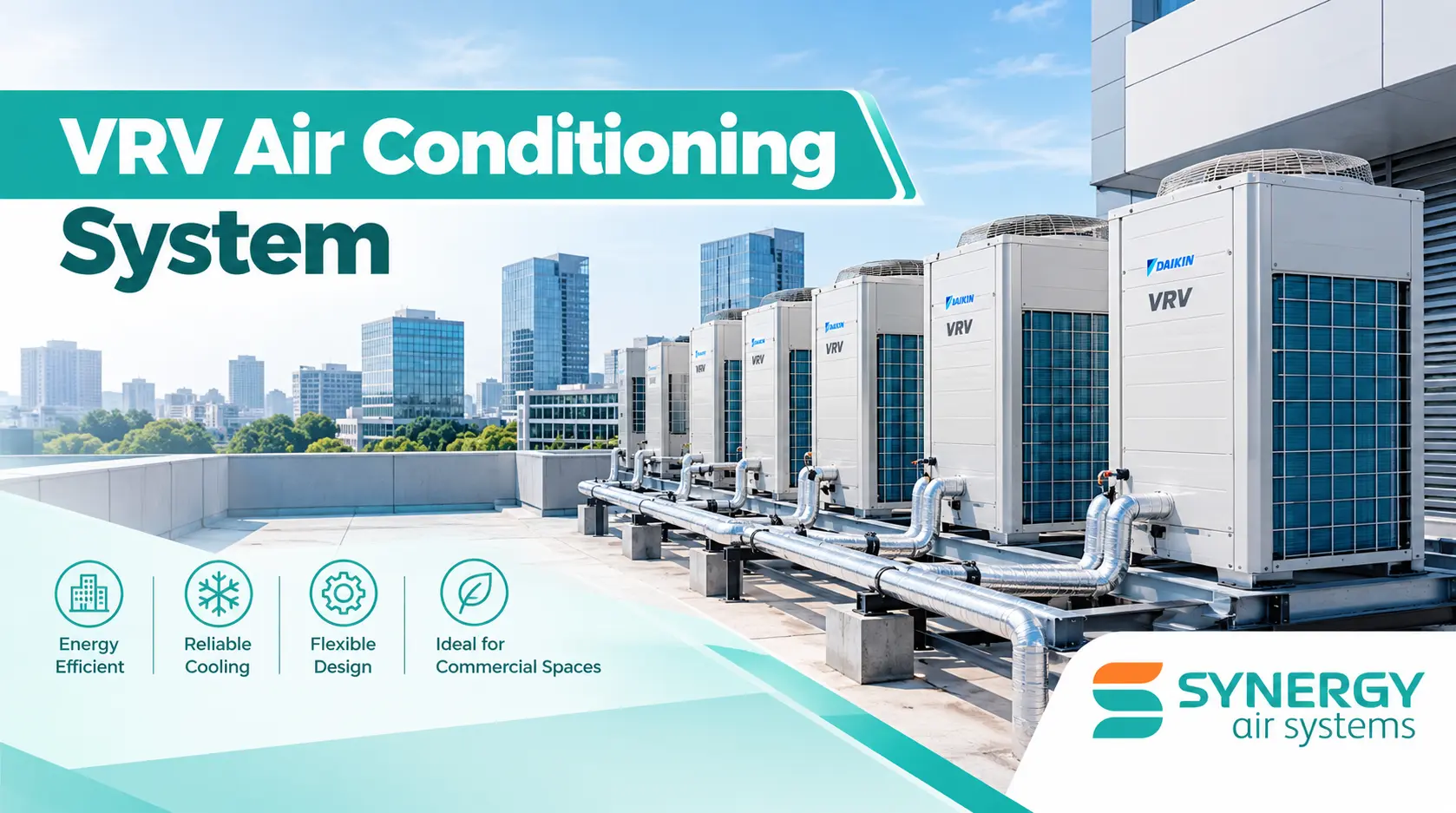
The outdoor unit houses the compressor, outdoor heat exchanger, and associated controls. The compressor circulates refrigerant and adjusts its operating capacity according to the system’s requirements. Many modern VRV systems use inverter-driven compressors to support variable-capacity operation.
Indoor Units and Refrigerant Piping
Indoor units deliver cooling or heating to individual zones. Depending on the building’s requirements, they may include cassette, wall-mounted, concealed ducted, or other compatible configurations.
Refrigerant piping connects the indoor and outdoor units. Proper pipe sizing, refrigerant distribution, insulation, and installation are essential for reliable operation and system performance.
Control devices, temperature sensors, and electronic expansion valves also help regulate refrigerant flow and maintain the required indoor conditions.
What Is the Difference Between VRV and VRF Systems?
VRV and VRF refer to the same general category of air conditioning technology. The main difference is the terminology used by the industry.
| Feature | VRV | VRF |
|---|---|---|
| Full form | Variable Refrigerant Volume | Variable Refrigerant Flow |
| Terminology | Daikin trademark | Generic industry term |
| Operating principle | Variable refrigerant control | Variable refrigerant control |
| Main purpose | Multi-zone heating and cooling | Multi-zone heating and cooling |
| System configurations | Depends on the selected model | Depends on the selected manufacturer and model |
Both terms describe systems that vary refrigerant delivery to meet the requirements of different indoor zones. Differences in performance, controls, features, and installation requirements depend on the specific equipment rather than the terminology alone.
What Are the Types of VRV Air Conditioning Systems?
VRV systems are available in different configurations. Two important types are heat pump systems and heat recovery systems.
VRV Heat Pump Systems
A VRV heat pump system provides heating or cooling through a shared outdoor unit and multiple indoor units. Depending on the design, indoor units generally operate in the same overall mode.
This configuration can be suitable for buildings where different zones usually require heating or cooling at the same time.
VRV Heat Recovery Systems
A VRV heat recovery system can provide cooling in some zones while supplying heating to others, where the selected model supports simultaneous operation.
For example, an internal room with substantial heat-generating equipment may require cooling while an external room requires heating. A heat recovery system can transfer heat from areas requiring cooling to areas requiring heating, reducing the need to reject or generate that heat separately.
This configuration can be particularly useful in offices, hotels, and multi-zone commercial buildings with varying thermal requirements.
What Are the Benefits of VRV Air Conditioning Systems?
VRV systems offer several potential advantages for suitable commercial and institutional applications.
- Energy efficiency: Variable-capacity operation can reduce energy consumption under part-load conditions compared with some conventional systems.
- Individual temperature control: Compatible indoor units allow occupants or building operators to adjust settings by zone.
- Flexible zoning: Multiple rooms and areas can be served by a coordinated system.
- Space utilisation: Multiple indoor units can connect to shared outdoor equipment, potentially reducing the need for separate outdoor units.
- Operational flexibility: Different indoor unit types can accommodate varying room layouts and architectural requirements.
- Heat recovery: Compatible heat recovery configurations can transfer heat between zones that require cooling and heating simultaneously.
These benefits are not guaranteed in every building. Performance depends on climate, occupancy patterns, equipment selection, system sizing, installation, controls, and maintenance.
Where Are VRV Air Conditioning Systems Used?
VRV systems are commonly considered for buildings that need flexible temperature control across multiple zones.
Typical applications include:
- Commercial offices: Different departments, meeting rooms, and workspaces can have separate temperature settings.
- Hotels: Guest rooms and common areas can have different heating and cooling requirements.
- Healthcare facilities: Suitable areas can use independently controlled air conditioning, subject to the facility’s ventilation, filtration, pressure-control, and infection-control requirements.
- Educational institutions: Classrooms, administrative offices, and shared spaces can have different operating schedules.
- Retail and mixed-use buildings: Shops, offices, and other occupied areas can have varying thermal loads.
- Institutional buildings: Multi-zone systems can support diverse room layouts and operating requirements.
For industrial environments, the suitability of VRV depends on process heat loads, ventilation requirements, environmental conditions, and the need for specialised HVAC controls. Critical manufacturing areas may require dedicated air handling, filtration, humidity control, or process cooling in addition to ordinary air conditioning.
Frequently Asked Questions
Is VRV air conditioning the same as VRF?
VRV and VRF describe the same general type of variable-refrigerant air conditioning technology. VRV is Daikin’s trademarked term, while VRF is the generic industry term.
Is a VRV system suitable for commercial buildings?
Yes. VRV systems can suit offices, hotels, retail spaces, and other commercial buildings that need independent temperature control across multiple zones. Suitability depends on the building’s cooling and heating loads, layout, and operational requirements.
Can a VRV system provide both heating and cooling?
Yes. VRV systems can provide heating and cooling, depending on the model. Heat pump configurations generally operate in one overall mode at a time, while compatible heat recovery systems can provide heating and cooling simultaneously in different zones.
Are VRV systems energy-efficient?
VRV systems can operate efficiently by adjusting compressor capacity and refrigerant flow to match demand. Actual energy performance varies with the building, climate, equipment selection, installation, and control strategy.
What should be considered before installing a VRV system?
Important considerations include the building’s heating and cooling loads, room layout, required indoor unit types, refrigerant piping routes, ventilation needs, electrical supply, controls, maintenance access, and applicable safety requirements. A qualified HVAC engineer should assess these factors before selecting the system.
Choosing the Right VRV System for Your Building
Selecting a VRV system requires more than comparing equipment capacities. The system must match the building’s thermal loads, zoning requirements, operating schedules, and long-term maintenance needs.
Synergy Air Systems provides HVAC engineering services, including Daikin VRV system design, installation, and commissioning for commercial and institutional projects. Our team can help assess project requirements and identify an appropriate air conditioning solution.
If you are planning a new HVAC installation or upgrading an existing system, visit our Daikin VRV Systems service page to learn more, or explore our industrial and commercial HVAC solutions.
The right system design can support reliable climate control, efficient operation, and comfortable indoor environments over the equipment’s service life.
Table of Contents
Toggle