Molecular Filtration System: Protecting Electronics & Critical Environments

Table of Contents
ToggleModern industrial facilities depend heavily on electronic control systems, automation equipment, data networks, and sensitive instrumentation. However, many organizations focus only on dust filtration while overlooking an equally dangerous threat airborne molecular contaminants. A properly designed molecular filtration system helps remove corrosive gases and chemical pollutants that can silently damage electronics, reduce equipment reliability, and increase maintenance costs.
Across industrial facilities in India, contaminants such as hydrogen sulfide (H₂S), sulfur dioxide (SO₂), chlorine, ammonia, and volatile organic compounds (VOCs) are often present at concentrations that may not affect people immediately but can gradually attack electronic components. This is why a molecular filtration system India solution has become increasingly important for data centers, control rooms, substations, pharmaceutical plants, wastewater treatment facilities, and manufacturing environments where uninterrupted operations are critical.
What Is a Molecular Filtration System?
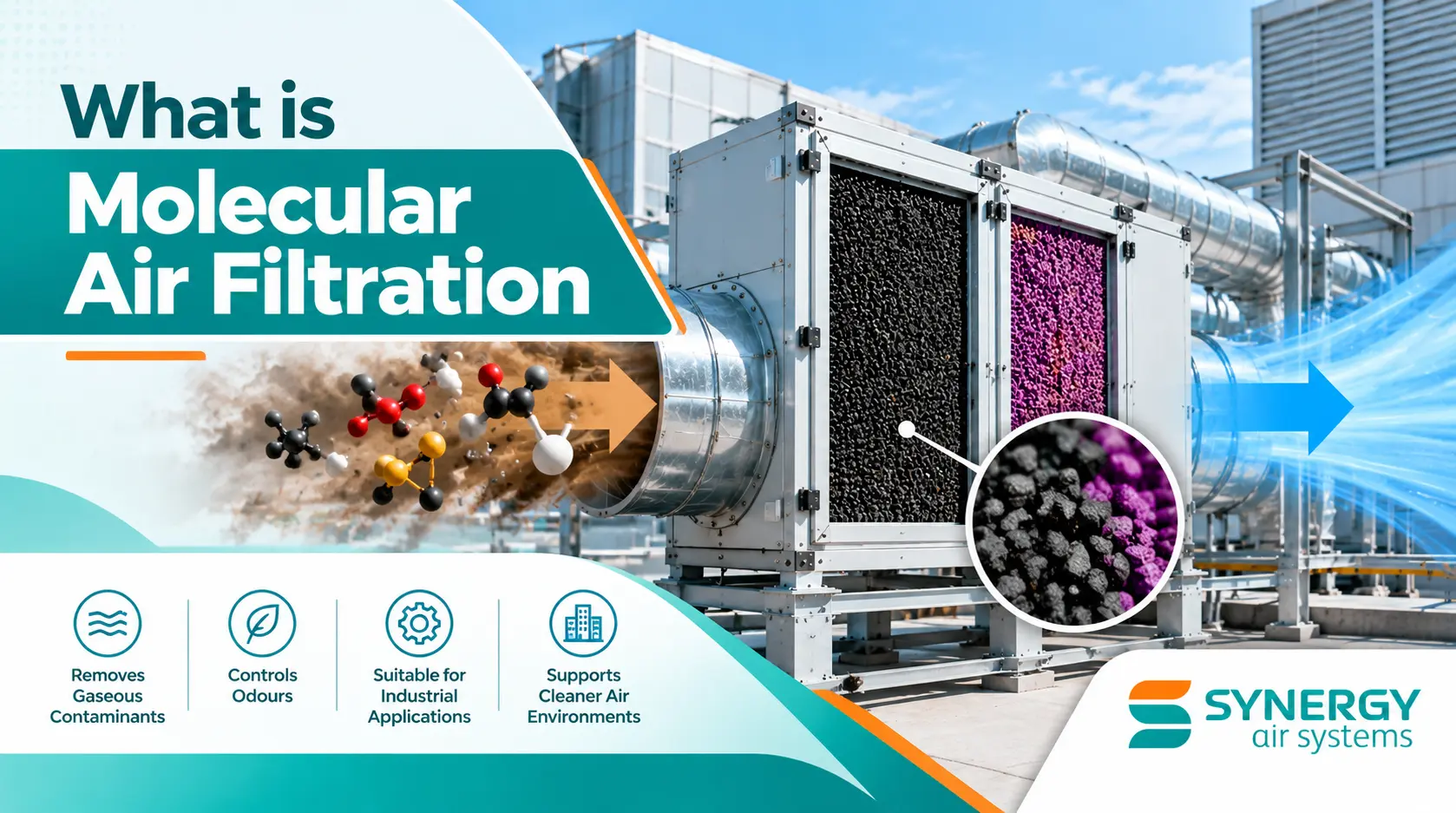
A molecular filtration system is an air purification technology specifically designed to remove gaseous contaminants at the molecular level. Unlike conventional air filters that capture dust particles, pollen, or airborne debris, molecular filters target contaminants that exist as gases and cannot be trapped by standard particulate filters.
To understand the difference, imagine a facility equipped with high-efficiency particulate filters. The air may appear clean, and dust levels may be minimal, yet corrosive gases can still pass through the HVAC system and circulate throughout the building. Over time, these contaminants settle on circuit boards, electrical contacts, relays, sensors, and control panels, causing corrosion and equipment degradation.
This is where Molecular Filtration becomes essential. By removing harmful gases before they reach critical assets, organizations can significantly improve equipment lifespan and operational reliability.
Why Electronics Are Vulnerable to Molecular Contamination
One of the most common misconceptions is that electronic equipment only fails because of heat, dust, or electrical issues. In reality, airborne chemical contaminants are often responsible for premature failures in industrial environments.
When corrosive gases enter electrical rooms or control centers, they react with metal surfaces found on:
- Circuit boards
- Connectors
- Copper traces
- Relay contacts
- PLC systems
- Switchgear components
- Communication equipment
Initially, the damage may be invisible. Microscopic corrosion begins forming on metal surfaces, gradually increasing electrical resistance and reducing component reliability. Months later, organizations may experience unexplained system failures, communication errors, instrument inaccuracies, or complete equipment breakdowns.
The challenge is that these failures often occur long after exposure, making the root cause difficult to identify.
Industries with high levels of sulfur compounds, chemical emissions, or wastewater gases are particularly vulnerable to this type of contamination.
How a Molecular Filtration System Works
The effectiveness of a molecular filtration system lies in its ability to capture contaminants that are thousands of times smaller than particles removed by conventional filters.
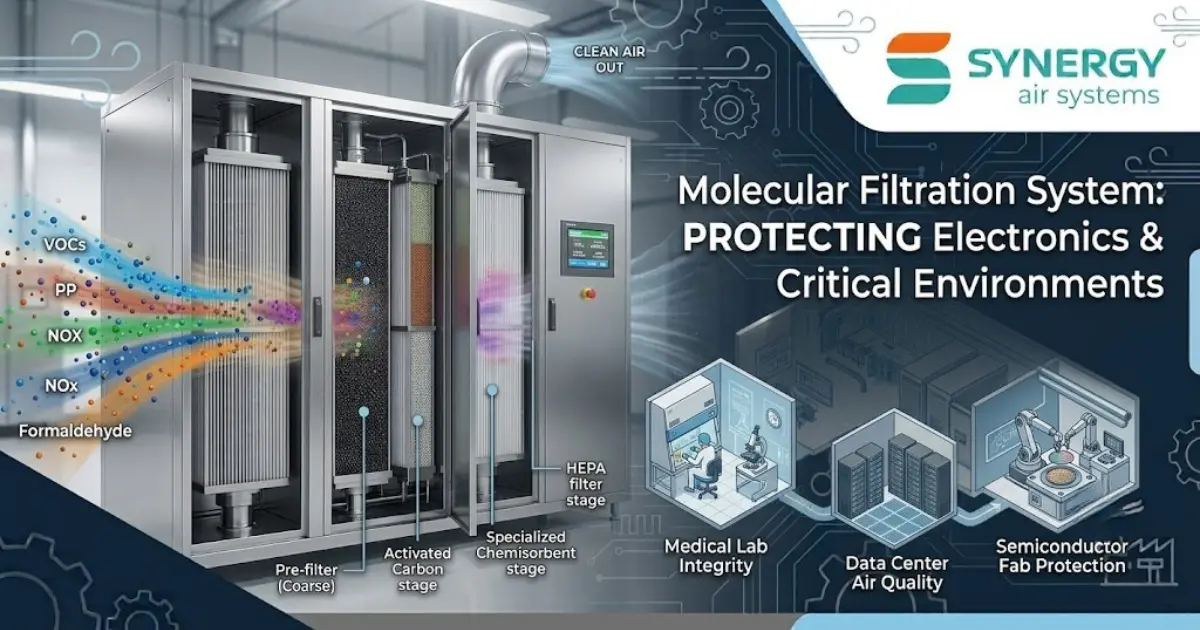
The filtration process generally occurs in multiple stages.
Stage 1: Particulate Pre-Filtration
Before air reaches the molecular filtration media, larger airborne particles are removed using conventional pre-filters. This step protects the filtration media from unnecessary loading and improves overall system efficiency.
Stage 2: Molecular Contaminant Removal
The air then passes through specially engineered filtration media designed to capture gaseous contaminants.
Depending on the application, the media may utilize:
- Activated carbon
- Chemically impregnated alumina
- Potassium permanganate media
- Blended molecular filtration media
These materials provide a large surface area where contaminants can be adsorbed or chemically neutralized.
Stage 3: Clean Air Delivery
After treatment, the purified air is supplied back into the protected environment. The result is a significantly reduced concentration of corrosive gases and chemical pollutants.
This process forms the foundation of modern chemical media air filtration system technology used in critical facilities worldwide.
Activated Carbon vs. Chemical Media: Understanding the Difference
Many people assume that all molecular filtration systems use activated carbon. While activated carbon is highly effective for certain applications, it is not always the best solution for every contaminant.
Activated Carbon Air Filters
An activated carbon air filter industrial system works primarily through adsorption. The porous carbon structure attracts and holds gaseous molecules on its surface.
Activated carbon performs well when removing:
- VOCs
- Solvents
- Organic odors
- Hydrocarbon-based contaminants
Chemical Media Filtration
Some contaminants require a more advanced approach. Corrosive gases such as hydrogen sulfide and sulfur dioxide are often removed using chemically impregnated media that react with the contaminants and convert them into harmless compounds.
This process is known as chemisorption.
For industrial applications, combining adsorption and chemisorption technologies often delivers the most comprehensive protection.
Where Molecular Filtration Is Most Commonly Used
While molecular filtration can benefit many environments, certain facilities face a much higher risk of gaseous contamination.
Data Centers
Even low concentrations of corrosive gases can affect servers, network equipment, and storage systems. Molecular filtration helps maintain equipment reliability and reduce downtime risks.
Wastewater Treatment Plants
Hydrogen sulfide generated during wastewater processing is one of the most aggressive contaminants affecting electrical equipment. Molecular filtration is often installed to protect control rooms and instrumentation.
Power Generation Facilities
Power plants rely on highly sensitive monitoring and automation systems. Contamination-related failures can have significant operational consequences.
Pharmaceutical Manufacturing
Pharmaceutical facilities require controlled environments where air quality directly impacts product quality and equipment performance.
Industrial Manufacturing Plants
Manufacturing facilities located near chemical processing operations, refineries, or heavy industrial zones often experience elevated contamination levels requiring specialized filtration solutions.
This is one reason why demand for Gas-Phase Air Filtration technologies continues to grow across industrial sectors.
How to Know If Your Facility Needs Molecular Filtration
Many facilities do not realize they have a contamination problem until equipment failures become frequent.
Common warning signs include:
- Corrosion on electrical contacts
- Frequent PLC failures
- Unexplained instrument malfunctions
- Premature relay failures
- Tarnishing of copper surfaces
- Increased maintenance costs
- High humidity combined with industrial gas exposure
A site contamination assessment can help identify airborne molecular contaminants and determine whether filtration improvements are necessary.
Choosing the Right Molecular Filtration Solution
Selecting the appropriate system requires understanding the specific contaminants present within the facility.
Key considerations include:
- Contaminant type
- Concentration levels
- Airflow requirements
- Equipment sensitivity
- Environmental conditions
- Maintenance expectations
Not all filtration media perform equally against every contaminant. Proper media selection is often the most important factor influencing long-term performance.
Industry standards such as ASHRAE 145.1 help establish testing methodologies for evaluating gas-phase filtration media, while molecular filtration manufacturers provide performance data for different contaminant profiles.
Find the Right Molecular Filter
Protecting sensitive electronics from airborne contaminants requires more than traditional HVAC filtration. A properly engineered molecular filtration system can significantly reduce corrosion risks, improve equipment reliability, and lower long-term maintenance costs.
Whether you operate a data center, wastewater treatment plant, pharmaceutical facility, power plant, or industrial manufacturing site, investing in advanced molecular filtration can help safeguard critical assets and support uninterrupted operations.
Find the Right Molecular Filter and discover a customized solution designed for your environment and contamination challenges.
Frequently Asked Questions
What is a molecular filtration system?
A molecular filtration system removes gaseous contaminants and airborne chemical pollutants that cannot be captured by conventional particulate filters.
How does molecular filtration protect electronics?
It removes corrosive gases that can react with electronic components, helping prevent corrosion, failures, and reliability issues.
Is activated carbon enough for molecular filtration?
Activated carbon is effective for VOCs and odors, but corrosive gases often require chemically treated media for complete protection.
What industries benefit from molecular filtration?
Data centers, wastewater treatment plants, power generation facilities, pharmaceutical manufacturers, and industrial plants commonly use molecular filtration systems.
What is the difference between particulate filtration and molecular filtration?
Particulate filtration removes solid particles such as dust, while molecular filtration targets gaseous contaminants at the molecular level.
Table of Contents
Toggle