Gas Phase Filtration System India: How It Works & Why Industries Need It

Table of Contents
ToggleIndustrial facilities today face a growing challenge that often goes unnoticed until significant damage has already occurred airborne molecular contaminants. A properly designed gas phase filtration system India solution helps industries control corrosive gases, odors, and harmful airborne chemicals that can affect equipment reliability, employee safety, and operational performance. From data centers and control rooms to wastewater treatment plants and petrochemical facilities, gas phase filtration has become a critical component of modern air quality management strategies.
As industries across Ahmedabad, Gujarat, and India continue to invest in automation and sensitive electronic systems, protecting these assets from gaseous contaminants is more important than ever.
What Is a Gas Phase Filtration System?
Unlike conventional particulate filters that capture dust and airborne particles, gas phase filtration systems are designed to remove molecular contaminants present in the air.
These contaminants may include:
- Hydrogen sulfide (H₂S)
- Sulfur dioxide (SO₂)
- Nitrogen dioxide (NO₂)
- Chlorine (Cl₂)
- Ammonia (NH₃)
- Volatile Organic Compounds (VOCs)
- Organic odors and industrial gases
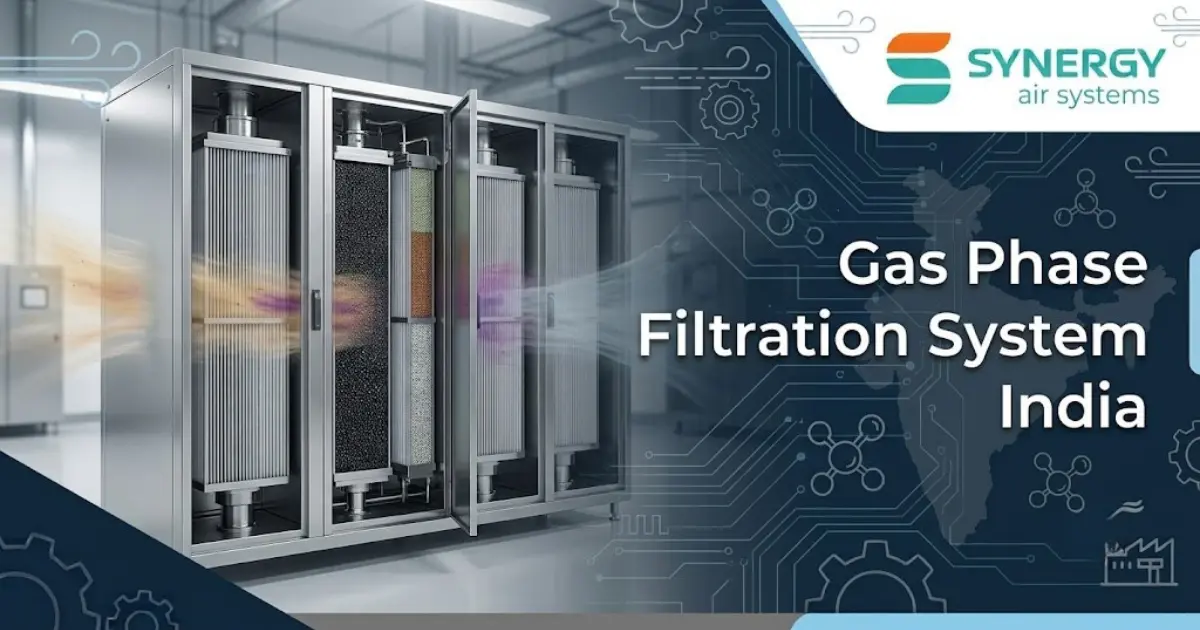
A gas phase filtration system uses specially engineered filtration media to adsorb or chemically neutralize these contaminants before they reach occupied spaces or critical equipment.
Why Traditional Air Filters Are Not Enough
Many industrial facilities rely on standard HVAC filtration systems to maintain indoor air quality. While these filters are highly effective at removing dust and particulate matter, they cannot capture gaseous pollutants.
This creates a hidden risk in environments where corrosive gases are present. Even when particulate levels appear acceptable, airborne chemicals can continue attacking:
- Electrical control panels
- PLC systems
- Instrumentation equipment
- Data center electronics
- Switchgear rooms
- Process control systems
This is where specialized Gas-Phase Air Filtration solutions provide a significant advantage by targeting contaminants that traditional filters cannot remove.
How Gas Phase Filtration Works
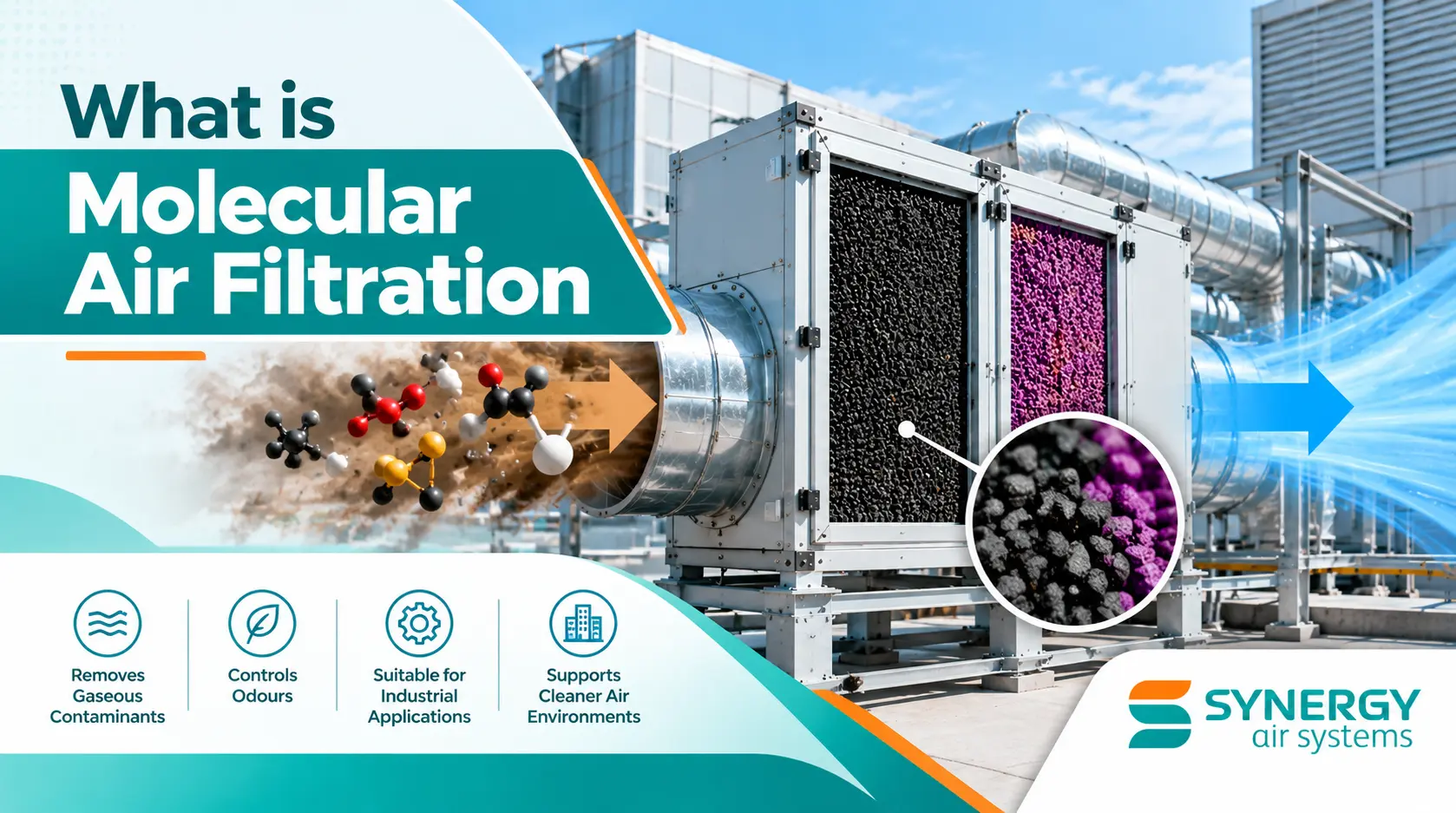
Gas phase filtration systems typically use adsorbent or chemically treated media to capture molecular contaminants.
Adsorption Process
Activated carbon and other porous media attract and hold gaseous molecules on their surface through adsorption.
This process is highly effective for:
- VOC removal
- Odor control
- Organic contaminant reduction
Chemisorption Process
For corrosive gases, chemically impregnated media reacts with contaminants and converts them into harmless compounds.
This method is commonly used for removing:
- Hydrogen sulfide
- Sulfur dioxide
- Chlorine
- Nitrogen oxides
Many modern molecular filtration system designs combine adsorption and chemisorption technologies to address a broad range of airborne contaminants.
Industries That Need Gas Phase Filtration
While almost every industrial facility can benefit from cleaner air, certain sectors face a much higher risk from gaseous contamination.
Wastewater Treatment Plants
Wastewater facilities generate hydrogen sulfide and other corrosive gases that can rapidly damage electronic equipment and infrastructure.
Oil & Gas Facilities
Refineries and petrochemical plants often contain airborne sulfur compounds that require continuous contamination control.
Data Centers
Sensitive electronics can suffer premature failure when exposed to low concentrations of corrosive gases over time.
Power Generation Facilities
Control rooms and electrical substations require protection from airborne contaminants that can affect critical monitoring and automation systems.
Pharmaceutical Manufacturing
Maintaining controlled environments is essential for product quality and equipment reliability.
Food Processing Facilities
Gas phase filtration helps control odors and improve indoor air quality in production areas.
The Cost of Ignoring Molecular Contamination
Many organizations underestimate the impact of gaseous contaminants because corrosion often develops gradually.
Common consequences include:
- Premature equipment failure
- Increased maintenance costs
- Unexpected downtime
- Reduced operational reliability
- Product quality issues
- Safety concerns
In highly automated facilities, even minor corrosion can lead to expensive disruptions and production losses.
Implementing a properly engineered Molecular Filtration strategy helps mitigate these risks and extend equipment lifespan.
Understanding Corrosion Control Standards
Industries concerned about molecular contamination often rely on recognized standards and guidelines to evaluate environmental risks.
ASHRAE 145.2
ASHRAE Standard 145.2 provides testing methods for evaluating the performance of gas-phase air-cleaning equipment. It helps engineers compare filtration technologies and select appropriate solutions for specific applications.
ISA-71.04
The ISA-71.04 standard is widely used for assessing airborne contamination levels in industrial environments and determining the potential impact on electronic equipment.
Facilities operating in corrosive environments frequently use ISA classifications to guide contamination control and filtration strategies.
Key Components of a Gas Phase Filtration System
A typical system may include:
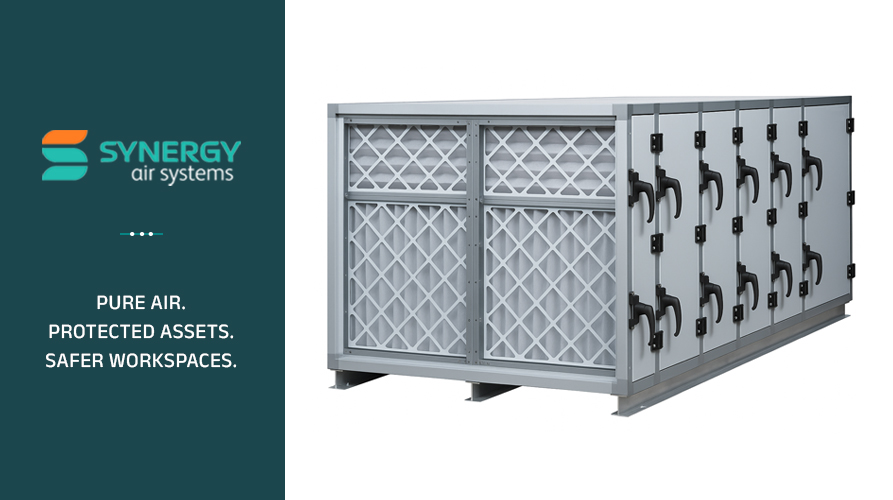
Pre-Filters
Remove larger particulate matter before air reaches the gas filtration media.
Chemical Media Filters
Contain specially formulated media designed to adsorb or neutralize gaseous contaminants.
Air Handling Equipment
Ensures proper airflow through the filtration system for maximum contaminant removal efficiency.
Monitoring Systems
Advanced installations may include sensors that track contaminant levels and filter performance.
Choosing the Right Chemical Filtration System
Selecting the right chemical filtration system Ahmedabad solution depends on several factors:
- Type of contaminants present
- Concentration levels
- Airflow requirements
- Environmental conditions
- Equipment sensitivity
- Regulatory requirements
A detailed site assessment is often necessary to identify contamination sources and determine the most effective filtration strategy.
Facilities located in industrial regions of Ahmedabad and Gujarat frequently encounter unique contamination challenges that require customized engineering solutions.
Why Industries in Gujarat Are Investing in Gas Phase Filtration
Gujarat’s strong industrial presence includes petrochemical complexes, pharmaceutical facilities, manufacturing plants, wastewater treatment infrastructure, and power generation operations.
These environments often contain airborne contaminants that can impact both equipment reliability and workplace air quality.
As industries continue to adopt digital automation and sophisticated control systems, demand for advanced gas phase air filter Ahmedabad solutions is increasing. Organizations are recognizing that preventing corrosion is significantly more cost-effective than replacing damaged equipment and managing unplanned downtime.
Explore Our Gas Phase Filtration Systems
Protecting critical assets from molecular contamination requires more than standard HVAC filtration. A properly engineered gas phase filtration solution helps improve reliability, reduce maintenance costs, and extend the lifespan of sensitive equipment.
Whether you operate a wastewater treatment plant, industrial manufacturing facility, pharmaceutical plant, data center, or power generation site, investing in advanced gas-phase filtration can deliver long-term operational benefits.
Explore Our Gas Phase Filtration Systems and discover how customized contamination control solutions can help safeguard your facility.
Frequently Asked Questions
What is a gas phase filtration system?
A gas phase filtration system removes airborne molecular contaminants such as hydrogen sulfide, sulfur dioxide, chlorine, VOCs, and other harmful gases that traditional particulate filters cannot capture.
How does gas phase filtration differ from particulate filtration?
Particulate filtration removes dust and airborne particles, while gas phase filtration targets gaseous contaminants at the molecular level.
Which industries benefit most from gas phase filtration?
Wastewater treatment, oil & gas, pharmaceuticals, power generation, manufacturing facilities, and data centers commonly use gas phase filtration systems.
What is molecular filtration?
Molecular filtration is the process of removing gaseous contaminants from the air using adsorption, chemisorption, or a combination of both technologies.
Why is gas phase filtration important for control rooms?
Control rooms contain sensitive electronic equipment that can be damaged by corrosive gases, leading to system failures and costly downtime.
Table of Contents
Toggle