Indoor Air Quality Solution Gujarat: How Industrial Facilities Can Breathe Safer

Table of Contents
ToggleIndustrial growth has transformed Gujarat into one of India’s leading manufacturing hubs. From pharmaceuticals and chemicals to food processing, engineering, textiles, automotive, and electronics, thousands of facilities operate around the clock. While production continues to expand, one critical factor often receives less attention than it deserves: Indoor Air Quality (IAQ).
Industrial environments generate airborne contaminants every day. Dust, smoke, PM2.5, PM10, Volatile Organic Compounds (VOCs), excessive Carbon Dioxide (CO₂), fumes, and microscopic particles can accumulate inside production areas when ventilation and filtration are inadequate.
Investing in the right indoor air quality solution Gujarat industries require is no longer simply about employee comfort. It supports workplace safety, operational efficiency, equipment reliability, regulatory compliance, and business continuity.
This guide explains how industrial air quality solutions work, why they matter, and what facilities across Gujarat should consider when selecting an effective system.
Why Indoor Air Quality Matters in Industrial Facilities
Indoor Air Quality (IAQ) refers to the condition of the air inside buildings and production facilities. Good IAQ means airborne contaminants remain within acceptable levels while temperature, humidity, and ventilation provide a safe working environment.
Industrial facilities face greater air quality challenges than standard commercial buildings because manufacturing processes frequently release airborne particles and gases.
Common sources include:
- Welding fumes
- Chemical processing
- Powder handling
- Textile fibres
- Packaging operations
- Metal grinding
- Woodworking dust
- Paint spraying
- Printing operations
- Vehicle emissions entering loading bays
Without appropriate control measures, pollutants circulate throughout the workspace, affecting both employees and sensitive equipment.
Common Indoor Air Pollutants Found in Gujarat Industries
Different industries produce different contaminants, making it essential to implement solutions tailored to specific operational requirements.
PM2.5 and PM10
Fine particulate matter is among the most significant industrial air pollutants.
PM10 includes particles smaller than 10 microns, while PM2.5 consists of particles less than 2.5 microns in diameter. These microscopic particles can remain airborne for extended periods and penetrate deep into the respiratory system.
Industries commonly generating particulate matter include:
- Cement
- Pharmaceuticals
- Engineering
- Foundries
- Textiles
- Food manufacturing
Volatile Organic Compounds (VOCs)
Many manufacturing processes release VOCs through solvents, adhesives, coatings, paints, and cleaning chemicals.
Elevated VOC concentrations may contribute to unpleasant odours and reduced indoor air quality. Effective filtration and ventilation help minimise their accumulation.
Carbon Dioxide (CO₂)
Although naturally present in the atmosphere, elevated indoor Carbon Dioxide (CO₂) levels may indicate insufficient ventilation, particularly in enclosed production areas, offices, laboratories, and control rooms.
High CO₂ concentrations can lead to reduced alertness and discomfort among occupants, highlighting the need for adequate fresh air supply.
Dust and Industrial Aerosols
Dust generated during production can spread throughout manufacturing facilities, affecting machinery, finished products, and employee workspaces.
Industrial hygiene programmes often prioritise effective dust control to reduce airborne particle exposure and maintain cleaner operations.
Health and Business Impact of Poor Indoor Air Quality
Poor IAQ affects more than employee wellbeing. It also influences operational performance across the organisation.
Potential impacts include:
- Increased employee discomfort
- Reduced productivity
- More frequent absenteeism
- Contamination of sensitive products
- Additional cleaning requirements
- Premature equipment wear
- Higher HVAC maintenance costs
- Reduced energy efficiency
- Greater risk of production downtime
For industries operating under stringent quality standards, maintaining clean indoor air is an essential component of risk management.
Key Components of an Effective Indoor Air Quality Solution
An effective indoor air quality solution Gujarat facilities can depend on combines multiple technologies rather than relying on a single product.
Industrial Air Purification Systems
Modern air purification system industrial solutions are designed to remove airborne contaminants before they spread throughout the facility.
Depending on operational requirements, systems may include:
- Centralised air purification
- Local extraction units
- Dust collection systems
- Source capture solutions
- Ceiling-mounted air cleaners
- Portable industrial air purifiers
Selecting the appropriate configuration depends on pollutant type, facility layout, production process, and airflow requirements.
Advanced Filtration Technologies
Industrial air purification relies on multiple filtration stages to target different contaminants.
HEPA Filter
A HEPA Filter is widely used for capturing extremely fine airborne particles. It is particularly suitable for industries where high levels of particulate control are required, including pharmaceutical manufacturing, electronics, laboratories, healthcare, and clean production environments.
Activated Carbon Filter
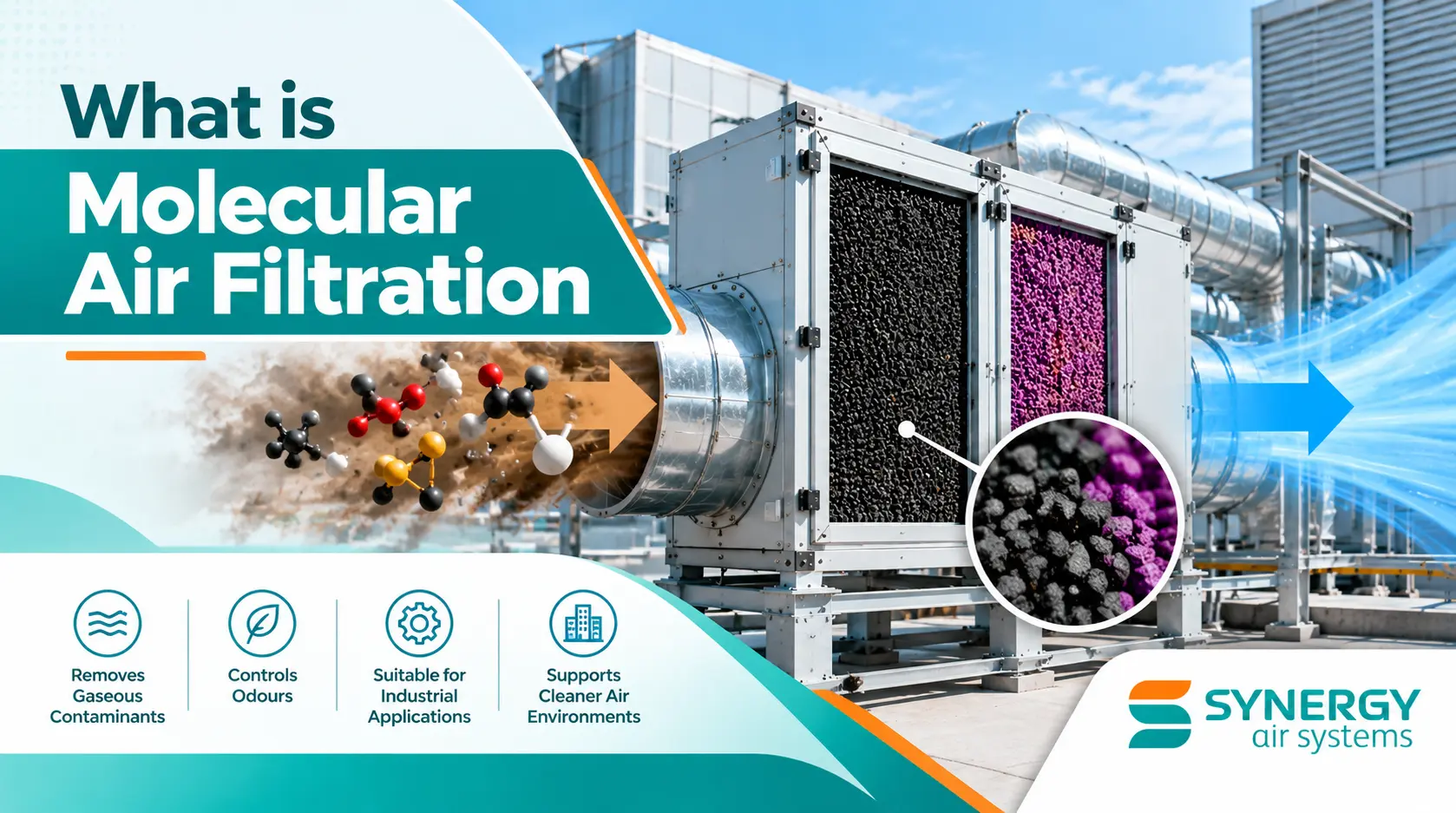
An Activated Carbon Filter is designed to reduce gases, chemical vapours, odours, and many VOCs that particulate filters cannot effectively remove.
Facilities handling solvents, paints, printing inks, adhesives, or chemical processing often incorporate activated carbon filtration as part of a comprehensive air treatment solution.
Ventilation Optimisation
Even the most advanced filtration system performs best when combined with properly designed Ventilation.
Effective ventilation strategies include:
- Fresh air intake optimisation
- Balanced air distribution
- Controlled exhaust systems
- Pressure management
- Airflow balancing
- Heat recovery where appropriate
Proper ventilation helps dilute airborne contaminants while maintaining a healthier indoor environment
IAQ Monitoring and Smart Controls
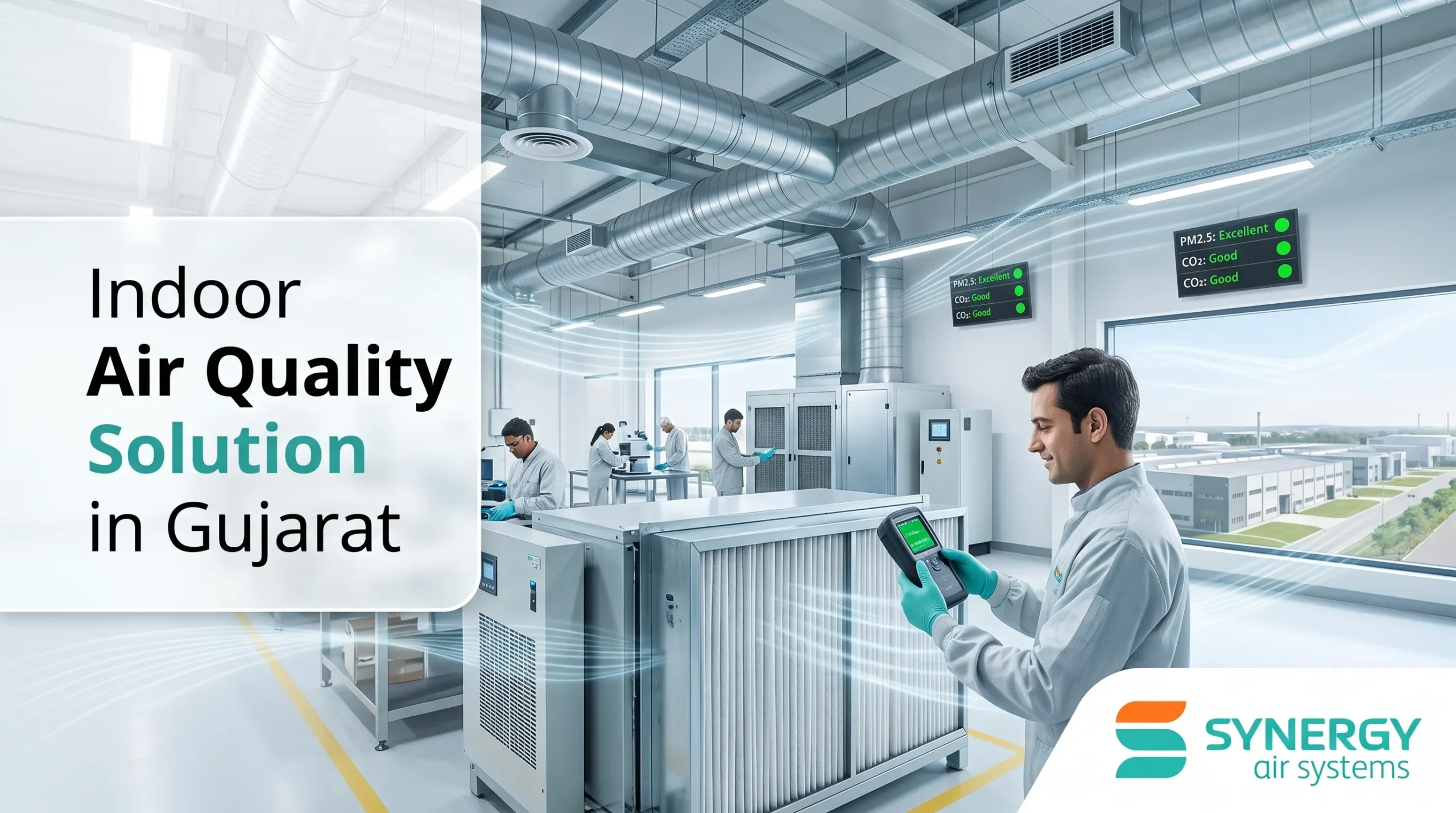
Continuous monitoring enables facilities to identify air quality trends and respond proactively.
Modern IAQ monitoring India solutions can track parameters such as:
- PM2.5
- PM10
- VOCs
- Carbon Dioxide (CO₂)
- Temperature
- Humidity
Real-time monitoring supports informed maintenance decisions and helps optimise ventilation and filtration performance.
Industrial Hygiene and Air Quality Management
Industrial Hygiene focuses on identifying, evaluating, and controlling workplace environmental factors that may affect employee health.
Air quality management forms a key component of industrial hygiene programmes by helping organisations:
- Assess airborne hazards
- Improve engineering controls
- Monitor contaminant levels
- Reduce occupational exposure
- Support safer working environments
Combining industrial hygiene practices with effective IAQ technologies creates a more comprehensive workplace air quality strategy.
Choosing the Right Indoor Air Quality Solution in Gujarat
Not every industrial facility has identical air quality challenges. The ideal solution depends on operational requirements, contaminant sources, and facility design.
When evaluating providers, consider whether they offer:
- Site-specific air quality assessments
- Custom-engineered solutions
- Industrial-grade filtration systems
- HVAC integration
- IAQ monitoring capabilities
- Preventive maintenance services
- After-sales technical support
- Scalable systems for future expansion
Working with an experienced provider helps ensure the solution aligns with production processes and long-term operational goals.
Why Preventive Maintenance Matters
Even high-performance air purification systems require regular maintenance to operate effectively.
Routine servicing may include:
- Filter replacement
- Airflow inspection
- Fan performance checks
- Sensor calibration
- Duct cleaning
- System balancing
- Performance verification
Preventive maintenance helps maintain filtration efficiency, supports equipment longevity, and reduces the likelihood of unexpected downtime.
Why Choose Synergy Air Systems
Industrial facilities require more than off-the-shelf air cleaning products they need engineered solutions that address specific operational challenges.
Synergy Air Systems provides customised indoor air quality solutions for industrial applications, helping businesses improve workplace air quality through advanced filtration, ventilation optimisation, and air purification technologies.
Whether your facility requires industrial air purification, HVAC air filtration upgrades, or comprehensive IAQ assessments, a tailored approach can help address your operational requirements while supporting safer and more efficient workplaces.
Frequently Asked Questions
What is an indoor air quality solution?
An indoor air quality solution combines filtration, ventilation, air purification, and monitoring technologies to improve the quality of air inside industrial, commercial, or institutional buildings.
Why is Indoor Air Quality important for industries?
Good Indoor Air Quality supports healthier working conditions, improves operational efficiency, protects sensitive equipment, and helps maintain consistent manufacturing environments.
What pollutants are commonly found inside industrial buildings?
Common contaminants include PM2.5, PM10, VOCs, Carbon Dioxide (CO₂), dust, fumes, smoke, aerosols, and process-generated airborne particles.
What is the role of a HEPA Filter?
A HEPA Filter captures extremely fine airborne particles and is widely used in applications requiring high levels of particulate filtration.
When should an Activated Carbon Filter be used?
Activated Carbon Filters are commonly used where gases, chemical vapours, odours, and VOCs need to be reduced alongside particulate filtration.
How does IAQ monitoring improve industrial operations?
Continuous IAQ monitoring provides real-time visibility into indoor air conditions, helping facilities optimise ventilation, schedule maintenance, and respond to changing environmental conditions.
Can HVAC systems improve indoor air quality?
Yes. Upgrading HVAC filtration, improving airflow, and integrating air purification technologies can significantly enhance indoor air quality when properly designed and maintained.
Why should industries in Gujarat invest in professional air quality solutions?
Industrial environments often face unique air quality challenges related to manufacturing processes. Professional solutions provide customised system design, effective contaminant control, and long-term operational support.
Conclusion
As Gujarat’s industrial sector continues to grow, maintaining excellent Indoor Air Quality (IAQ) is becoming an increasingly important operational priority. Airborne contaminants such as PM2.5, PM10, VOCs, and elevated Carbon Dioxide (CO₂) levels can affect workplace conditions, equipment performance, and manufacturing environments if left unmanaged.
A comprehensive indoor air quality solution Gujarat businesses can rely on should integrate industrial air purification, high-efficiency filtration, optimised ventilation, continuous IAQ monitoring, and preventive maintenance. By adopting a tailored approach, industrial facilities can create cleaner, safer, and more efficient workplaces that support long-term productivity and operational excellence.
Table of Contents
Toggle