

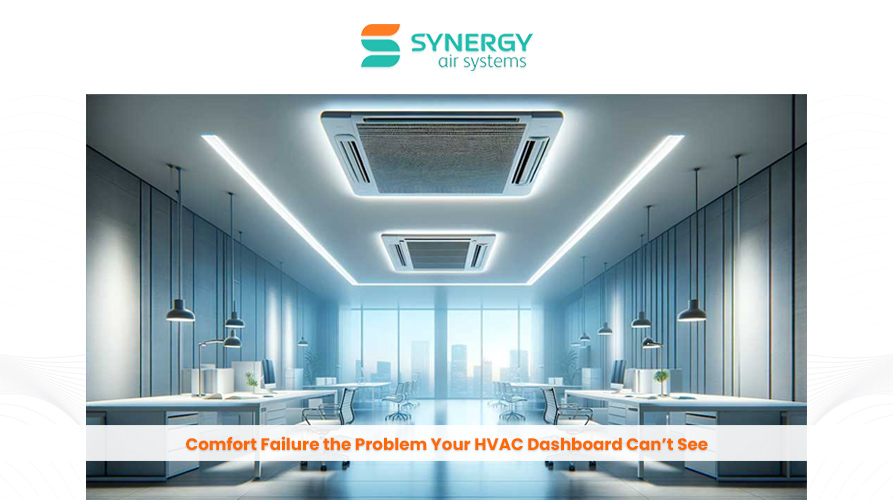
When we look at a modern commercial building and everything appears technically flawless. The Building Management System reports a steady temperature. The thermostats remain calm and obedient. The cooling equipment performs exactly as the design intended.
Yet the complaints keep arriving.
One department feels unusually cold. Another area feels warm and stuffy. Some corners of the building feel stagnant while others experience constant drafts. The numbers look correct, but the experience tells a different story.
This is the silent paradox many commercial buildings face. Temperature control alone does not define comfort. Behind the scenes, multiple mechanical and environmental factors shape how people actually experience an indoor environment. This is why experienced commercial HVAC services and advanced HVAC engineering services look beyond thermostat readings to understand the deeper performance behavior of modern heating ventilation air conditioning systems.
When comfort complaints persist despite perfect readings, the problem usually lies within airflow dynamics, zoning strategy, ventilation design, and system maintenance.
Why Temperature Control Alone Cannot Define Indoor Comfort
A thermostat measures air temperature. Human comfort, however, responds to a far more complex equation.
Comfort depends on how air moves through a space, how humidity interacts with that air, how surrounding surfaces radiate heat, and how effectively a building’s cooling and ventilation systems distribute conditioned air.
In many commercial facilities, the climate control systems maintain acceptable temperature values while airflow patterns quietly create uneven comfort conditions. An office area might technically remain within the design range, yet employees still experience discomfort because the surrounding airflow or radiant heat load feels different.
This is why modern energy efficient HVAC systems must consider multiple environmental factors rather than relying solely on temperature setpoints.
Airflow Distribution Problems in Commercial HVAC Systems
Air distribution is often the hidden variable in comfort performance. Even advanced commercial air conditioning systems can struggle if airflow is poorly distributed.
Many buildings encounter issues related to diffuser placement, duct routing, or improper balancing of ventilation ducting systems. These issues create uneven circulation patterns where certain areas receive excessive airflow while others receive very little.
Facilities that rely on professional ducting and ventilation services and specialized ventilation system services typically experience fewer of these problems because the system is designed and balanced correctly.
- Air Velocity and Draft Discomfort
When supply air leaves a diffuser at excessive velocity, occupants may feel constant drafts. Even if the air temperature is ideal, the moving air accelerates heat loss from the human body, creating a sensation of cold discomfort.
- Poor Duct Design and Air Short-Circuiting
Improperly designed ducts can cause supply air to move directly toward return grilles without circulating throughout the occupied space. This “short-circuiting” makes the system appear efficient while leaving some zones poorly conditioned.
- Dead Zones and Stagnant Air
Certain areas may experience minimal airflow due to inefficient duct layout or poor diffuser positioning. These stagnant pockets allow heat and humidity to accumulate, creating local discomfort despite stable thermostat readings.
Radiant Heat and Equipment Loads That Disturb Indoor Comfort
Temperature readings alone rarely reflect the impact of radiant heat.
Modern buildings often include large glass façades, high-power lighting systems, and equipment that produces substantial heat loads. These elements radiate energy into surrounding areas, altering the perceived comfort level of occupants.
Industrial facilities face an even greater challenge. Machinery, production lines, and industrial air handling units continuously generate thermal loads that influence the surrounding environment. Without proper integration of industrial HVAC systems, these heat sources can disrupt the balance of indoor conditions.
This is why advanced building ventilation solutions and integrated air filtration systems play an essential role in maintaining consistent comfort throughout large commercial environments.
Zoning Errors That Affect Commercial and Industrial HVAC Systems
One of the most common design oversights in modern buildings is incorrect zoning.
A single HVAC zone may serve areas with drastically different heat loads. For example, a server room located near a general office space can alter the cooling requirements of that entire zone. Similarly, laboratories, production areas, and open workspaces may all share the same airflow system despite their unique environmental needs.
Such design choices place excessive strain on industrial HVAC systems and reduce the efficiency of overall cooling and ventilation systems.
Professional HVAC engineering solutions often address this challenge by rebalancing airflow zones and implementing targeted HVAC system performance optimization strategies.
Signs Your Commercial Building Needs HVAC Servicing
Even the most advanced systems require regular evaluation. Several warning signs indicate that a building’s HVAC infrastructure needs attention.
Uneven cooling across different areas of the facility is often the first signal. Persistent hot or cold spots suggest airflow imbalance or duct issues. Rising energy consumption can also reveal underlying mechanical inefficiencies.
Routine HVAC system inspection allows technicians to detect early signs of wear and performance decline. Preventive air conditioning system maintenance and regular HVAC system maintenance help ensure the continued efficiency of central air conditioning system services in large commercial environments.
Benefits of Professional Commercial HVAC Maintenance Services
Preventive maintenance is one of the most effective ways to protect long-term system performance.
An experienced HVAC maintenance company performs detailed inspections that identify airflow restrictions, worn components, and ventilation issues before they escalate into costly failures. Skilled HVAC maintenance contractors also ensure that filters, ducts, and cooling components remain in optimal condition.
Regular air conditioning system maintenance improves efficiency, extends equipment lifespan, and stabilizes indoor comfort conditions. Over time, these practices significantly reduce operational disruptions in commercial buildings.
Industrial HVAC System Installation and Maintenance Guide
Designing and implementing reliable industrial HVAC systems requires far more than basic equipment installation.
Professional HVAC installation services involve load calculations, duct layout design, airflow analysis, and commissioning procedures that confirm proper operation. During HVAC system installation, engineers evaluate how the system interacts with the building structure, equipment heat loads, and ventilation requirements.
Facilities that invest in expert air conditioning installation services and reliable HVAC system installation practices benefit from improved performance stability and reduced long-term maintenance costs.
When Emergency HVAC Support Becomes Critical for Businesses
In commercial operations, HVAC downtime can quickly disrupt productivity.
Unexpected system failures may require urgent attention from a reliable HVAC repair service near me. Many facilities depend on emergency HVAC service Ahmedabad providers who offer immediate assistance during critical system breakdowns.
Reliable 24/7 HVAC repair services ensure that essential cooling and ventilation infrastructure continues operating without extended interruptions.
True Comfort Requires More Than Temperature Control
Temperature readings tell only part of the story. True indoor comfort depends on the balance of airflow, ventilation, radiant heat, humidity, and system design.
Commercial facilities that rely on professional commercial HVAC services, comprehensive HVAC engineering services, and reliable heating and cooling services are far better equipped to maintain consistent indoor conditions.
When buildings move beyond simple thermostat adjustments and embrace intelligent system design, the silent performance gap disappears—and the indoor environment finally matches the expectations of those who depend on it every day.
——————————————————————————————-
Struggling with uneven cooling or constant comfort complaints in your facility?
Connect with a trusted HVAC service provider to optimize airflow, ventilation, and system performance for long-term efficiency.
FAQs:
1. Why does my building feel uncomfortable even when the temperature is correct?
Comfort depends on airflow, humidity, radiant heat, and ventilation. Even if the thermostat shows the correct reading, poor air distribution or ventilation issues can create discomfort.
2. How often should commercial HVAC systems be serviced?
Most experts recommend professional HVAC system maintenance and inspection at least twice a year to ensure optimal performance and energy efficiency.
3. What services are included in commercial HVAC maintenance?
Commercial HVAC maintenance services usually include system inspection, filter replacement, duct and ventilation checks, airflow balancing, and performance testing.
4. When should a business consider HVAC system installation or upgrades?
If the system frequently breaks down, consumes excessive energy, or cannot maintain consistent comfort, it may be time for a professional HVAC system installation or system upgrade.
5. How can businesses find reliable HVAC contractors in Ahmedabad?
Look for experienced HVAC contractors in Ahmedabad who provide comprehensive services such as installation, maintenance, ventilation solutions, and emergency repair support.