
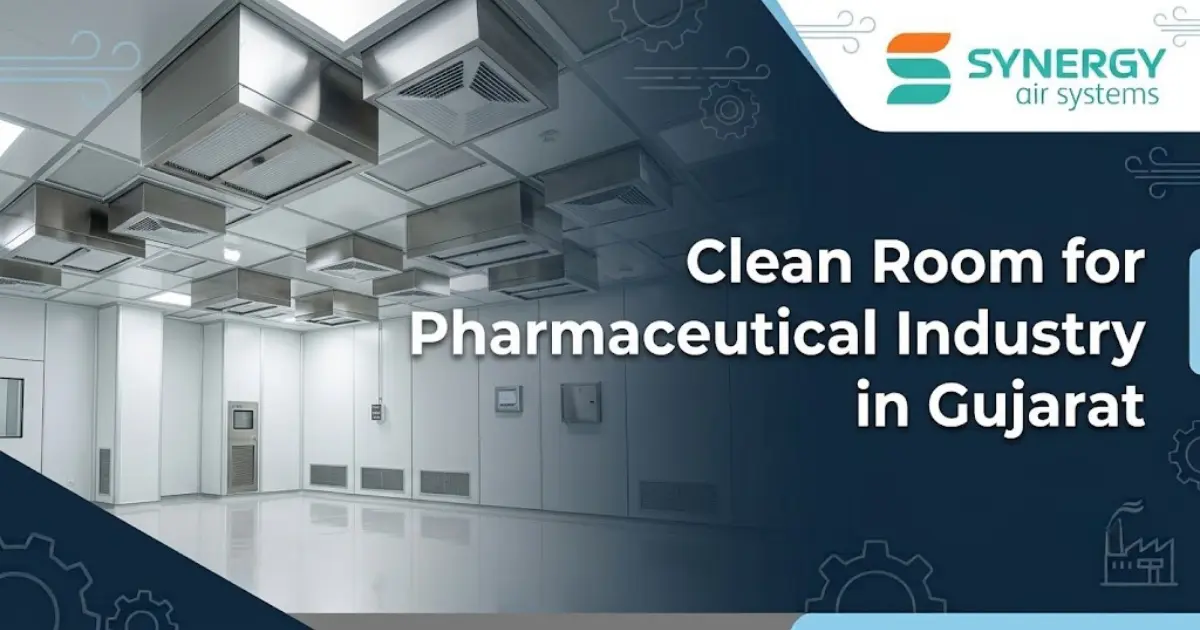
The pharmaceutical industry operates under some of the strictest environmental control requirements in manufacturing. A properly designed clean room pharmaceutical Gujarat facility is essential for maintaining product quality, preventing contamination, and meeting regulatory standards. Whether manufacturing tablets, injectables, APIs, or biotechnology products, pharmaceutical companies must ensure their cleanrooms comply with Good Manufacturing Practices (GMP) and maintain precise control over temperature, humidity, pressure differentials, and airborne particles.
With Gujarat being one of India’s largest pharmaceutical manufacturing hubs, investing in a GMP-compliant cleanroom HVAC system has become a critical requirement for pharmaceutical facilities seeking regulatory approval and operational excellence.
Table of Contents
ToggleWhy HVAC Design Is Critical in Pharmaceutical Cleanrooms
Unlike conventional industrial spaces, pharmaceutical cleanrooms require tightly controlled environmental conditions. HVAC systems serve as the backbone of cleanroom operations by regulating air quality and minimizing contamination risks.
A well-designed pharmaceutical HVAC system Gujarat facility helps:
- Maintain required cleanliness classifications
- Control airborne particulate contamination
- Regulate temperature and humidity
- Manage pressure cascades between clean zones
- Ensure employee and product safety
- Support GMP compliance requirements
Failure to maintain these parameters can lead to product rejection, regulatory observations, and costly production interruptions.
Understanding GMP Clean Room HVAC Requirements
Modern pharmaceutical facilities rely on specialized GMP clean room HVAC systems that are engineered to meet international and Indian regulatory standards.
Key HVAC design considerations include:
Air Filtration
High-efficiency particulate air (HEPA) filters play a vital role in removing airborne contaminants. Depending on the cleanroom classification, multiple filtration stages may be required to achieve the desired air cleanliness levels.
Air Changes Per Hour (ACH)
Pharmaceutical cleanrooms require specific air change rates to continuously remove contaminants and maintain clean operating conditions.
Pressure Differential Control
Pressure cascades prevent contamination transfer between rooms. Critical manufacturing areas typically maintain positive pressure to protect products from external contamination.
Temperature and Humidity Management
Many pharmaceutical processes require strict environmental control to maintain product stability and manufacturing consistency.
Regulatory Standards Governing Pharmaceutical Cleanrooms
Pharmaceutical manufacturers in Gujarat must comply with various national and international standards.
WHO GMP Guidelines
The World Health Organization provides comprehensive guidance on HVAC systems, contamination control, cleanroom classifications, and pharmaceutical manufacturing environments. These guidelines are widely recognized as a benchmark for cleanroom design and operation.
Schedule M Compliance
In India, pharmaceutical manufacturing facilities must comply with Schedule M requirements issued by the Central Drugs Standard Control Organization (CDSCO). These regulations define facility standards, environmental controls, and quality management practices required for pharmaceutical production.
Proper HVAC system design is often a major focus during regulatory inspections and facility audits.
Types of Pharmaceutical Cleanrooms
Different pharmaceutical operations require different cleanroom configurations.
Solid Dosage Manufacturing
Tablet and capsule manufacturing facilities focus on dust control, filtration efficiency, and environmental consistency.
Sterile Manufacturing Areas
Injectable and sterile product facilities require highly controlled environments with stringent filtration and contamination control measures.
API Manufacturing Facilities
Active Pharmaceutical Ingredient (API) facilities often require specialized ventilation systems to manage process emissions and maintain worker safety.
Biotechnology Laboratories
Biopharmaceutical and research facilities require precise environmental control to support sensitive laboratory operations.
Advantages of Modular Cleanrooms
Many pharmaceutical companies are adopting modular clean room Gujarat solutions because of their flexibility and scalability.
Benefits include:
- Faster installation
- Reduced construction time
- Easier expansion and modification
- Improved contamination control
- Lower lifecycle costs
Modular systems are particularly useful for pharmaceutical companies looking to expand production capacity without major facility disruptions.
Choosing the Right Pharma HVAC Partner
Selecting an experienced HVAC partner is essential for achieving GMP compliance and long-term operational reliability.
A qualified pharma HVAC contractor Ahmedabad should provide:
- HVAC design and engineering
- Cleanroom validation support
- Airflow modeling and analysis
- Pressure cascade design
- Energy-efficient system solutions
- Regulatory compliance expertise
Beyond equipment selection, successful cleanroom projects require a deep understanding of pharmaceutical processes and regulatory expectations.
Organizations planning facility upgrades can benefit from reviewing specialized Pharma HVAC solutions that address the unique requirements of pharmaceutical manufacturing environments.
Common HVAC Challenges in Pharmaceutical Facilities
Even well-designed cleanrooms can face operational challenges if HVAC systems are not properly maintained or optimized.
Common issues include:
- Inconsistent pressure differentials
- High energy consumption
- Filter performance degradation
- Temperature fluctuations
- Excessive humidity variations
- Airflow imbalance
Regular monitoring, preventive maintenance, and periodic validation help maintain system performance and compliance.
The Growing Demand for GMP-Compliant Cleanrooms in Gujarat
Gujarat continues to strengthen its position as a pharmaceutical manufacturing leader in India. As regulatory expectations evolve and global quality standards become more stringent, pharmaceutical companies are investing heavily in advanced cleanroom infrastructure.
Many successful pharmaceutical facilities across the region have demonstrated the importance of proper HVAC engineering and contamination control. Reviewing completed Pharmaceutical Projects can provide valuable insights into best practices for facility design and implementation.
Design Your GMP Cleanroom
Creating a GMP-compliant pharmaceutical cleanroom requires more than selecting HVAC equipment. It demands careful engineering, regulatory understanding, and a commitment to maintaining controlled manufacturing environments.
Whether you are planning a new facility, expanding production capacity, or upgrading an existing cleanroom, a properly designed HVAC system is critical to achieving operational efficiency and regulatory compliance.
Design Your GMP Cleanroom today and ensure your pharmaceutical facility is prepared for current and future GMP requirements.
Frequently Asked Questions
What is a pharmaceutical cleanroom?
A pharmaceutical cleanroom is a controlled environment designed to limit airborne particles, microbial contamination, temperature fluctuations, and humidity variations during pharmaceutical manufacturing.
Why is HVAC important in pharmaceutical cleanrooms?
HVAC systems control air quality, pressure differentials, temperature, and humidity, helping maintain GMP compliance and product quality.
What are GMP HVAC requirements?
GMP HVAC requirements include filtration efficiency, pressure control, air change rates, environmental monitoring, and contamination prevention measures.
What is Schedule M compliance?
Schedule M is an Indian regulatory framework that outlines GMP requirements for pharmaceutical manufacturing facilities, including infrastructure and environmental controls.
Why are modular cleanrooms becoming popular?
Modular cleanrooms offer faster deployment, flexibility, scalability, and cost-effective expansion compared to traditional cleanroom construction.