
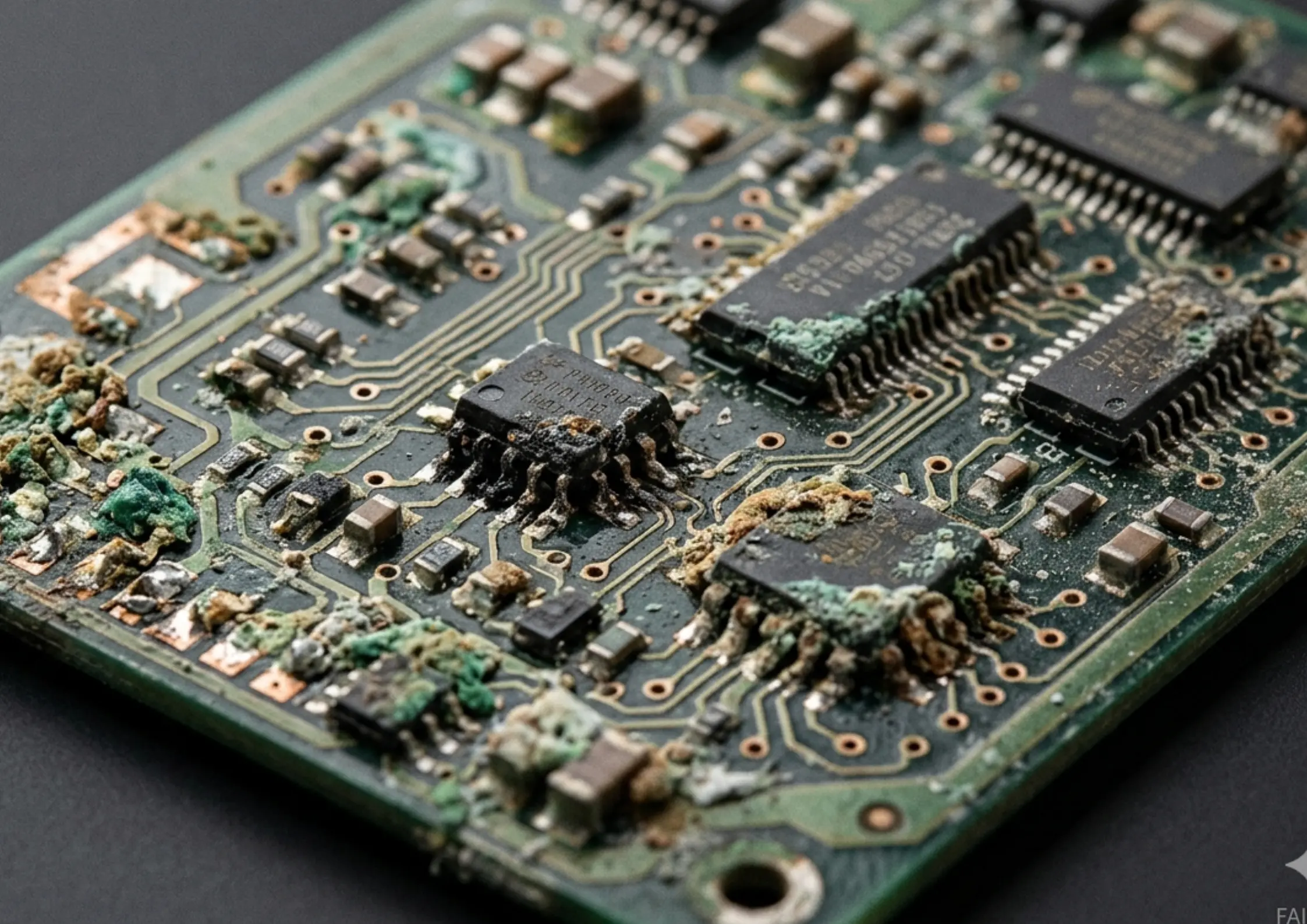

Standard air filters whether fiberglass, polyester, or even HEPA operate on a single physical principle: they capture particles. But gases have no particle size. They pass through every conventional filter completely unimpeded, invisible and undetected, until their damage is done.
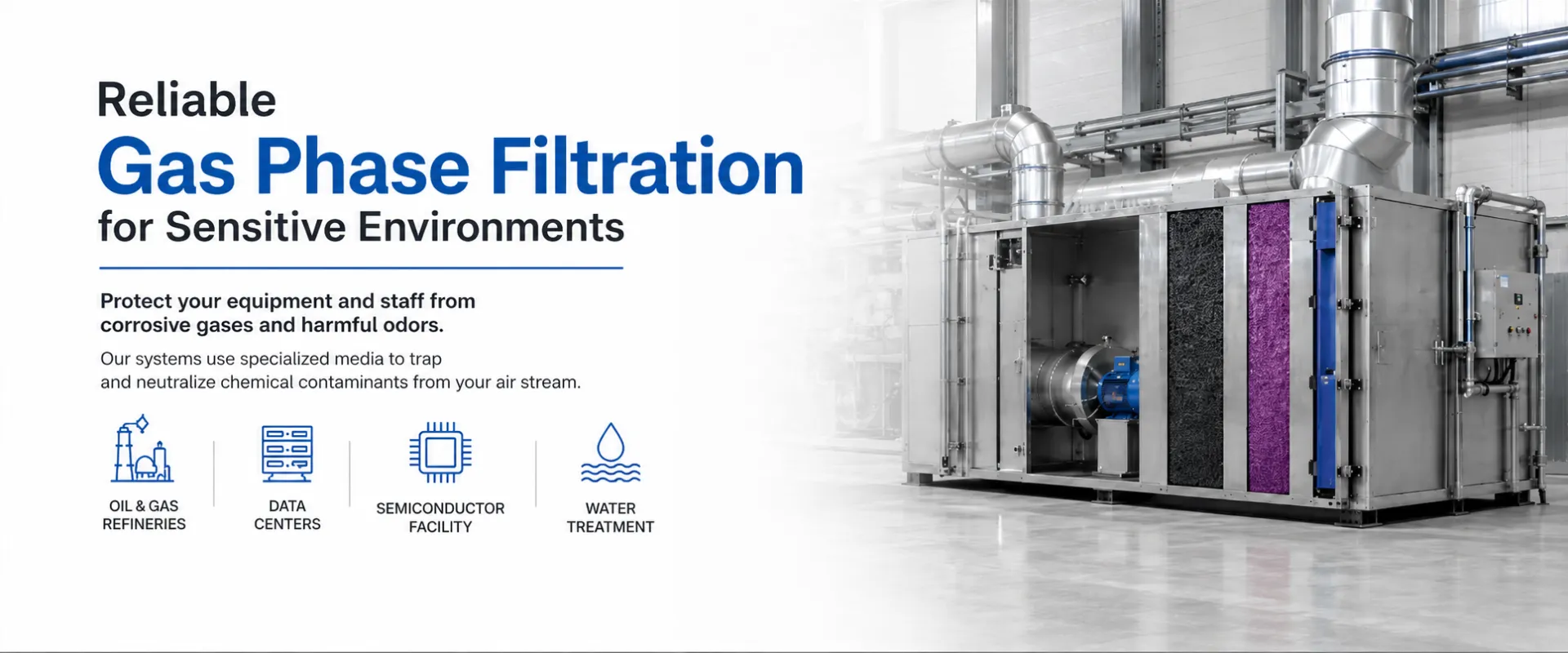
Gas-phase molecular filtration operates on an entirely different chemical principle: chemisorption. Rather than physically blocking contaminants, chemisorptive media chemically react with target gases at the molecular level converting them instantaneously and irreversibly into inert, solid compounds trapped within the media matrix. The result is not captured gas waiting to off-gas it is chemically transformed, permanently neutralized matter.
Synergy Air Systems engineers and supplies high-capacity chemisorption media systems for the removal of corrosive, toxic, and odorous gases from industrial air streams protecting assets, people, and processes.
Chemisorption vs. Physisorption – Understanding the Difference
Most people are familiar with activated carbon as an air purification medium. Activated carbon works primarily through physisorption gas molecules are attracted to and held on the enormous internal surface area of the carbon by weak Van der Waals forces. This is reversible: under heat, humidity changes, or when the carbon reaches saturation, captured molecules can desorb and re-enter the air stream.
Chemisorption is fundamentally different:
| Property | Physisorption (Standard Activated Carbon) | Chemisorption (Chemical Media) |
|---|---|---|
| Bonding mechanism | Weak Van der Waals forces | Strong covalent/ionic chemical bonds |
| Reversibility | Reversible desorption possible | Irreversible permanent conversion |
| Target specificity | Broad, non-selective | Highly selective to target gas(es) |
| Temperature sensitivity | Performance drops at high temp | Stable across wide temperature range |
| Humidity sensitivity | Significant performance loss >70% RH | More robust at elevated humidity |
| Regeneration | Possible (thermal) | Not regenerable replaced when exhausted |
For corrosive industrial gases, toxic fumes, and ISA-critical environments, chemisorption media are the definitive solution.
Our Chemical Media Portfolio
1. Oxidizing Chemisorption Media (Broad-Spectrum Corrosive Gas Removal)
Our broad-spectrum oxidizing pellets based on potassium permanganate (KMnO₄) impregnated on an alumina or zeolite substrate are the industry benchmark for corrosive gas removal. They target:
- Hydrogen Sulfide (H₂S): Oxidized to sulfate odourless, non-corrosive, trapped in media
- Sulfur Dioxide (SO₂): Converted to sulfate compounds
- Nitrogen Dioxide (NO₂): Oxidized to nitrate form
- Formaldehyde (HCHO): Oxidized to CO₂ and water
- Mercaptans and organic sulfur compounds: Converted to stable sulfate derivatives
Applications: Oil & Gas refineries, fertilizer plants, paper mills, wastewater treatment facilities, control rooms in highly corrosive industrial zones.
2. Engineered Activated Carbons (VOC, Odor & Organic Gas Control)
Not all activated carbons are equal. Our engineered activated carbon media are selected and impregnated based on your specific target gas profile:
- Standard steam-activated virgin carbon: Broad VOC removal solvents, aldehydes, aromatics (benzene, toluene, xylene)
- Acid-impregnated carbon: Selective removal of ammonia (NH₃) and amines essential for wastewater facilities and fertilizer plants
- Base-impregnated carbon: Selective removal of acid gases HCl, HF, H₂S at low concentration
- Potassium iodide (KI) impregnated carbon: Targeted mercury vapor and radioactive iodine capture for laboratory and nuclear applications
Activated carbon media are frequently used in hybrid dual-media beds combined with oxidizing pellets for comprehensive multi-gas coverage.
3. Target-Gas Chemical Blends
When a facility has a precisely identified gas profile for example, a semiconductor fab dealing primarily with NF₃ and HF, or a chlorine storage facility requiring Cl₂ and HCl scrubbing we formulate or specify custom blended chemical media targeting those exact molecular species.
Custom blends allow:
- Higher loading capacity for the primary target gas versus a generic broad-spectrum media
- Optimized bed depth reduced physical footprint for same performance
- Controlled selectivity avoiding unnecessary depletion of media capacity on lower-priority background gases
We work with our global filtration media partners to source or blend target-specific media for any industrial application.
4. Media Sizing, Bed Depth Engineering & System Design
Media selection is only half the equation. The performance of any gas-phase filtration system depends equally on engineering the correct:
- Face velocity (m/s through the media bed): too fast and contact time is insufficient; too slow and pressure drop wastes fan energy
- Bed depth (cm of media): determines contact time (dwell time) and total media capacity before exhaustion
- Media housing configuration: V-bank, flat panel, deep bed, or radial flow depending on space and airflow geometry
- Bypass prevention: ensuring no air bypasses the media through gaps or unsealed frames, which would allow untreated gas to pass
Our engineers use established Wheeler-Jonas modelling and Purafil’s validated design tools to calculate precise media quantities, bed depths, and predicted service life for your specific contaminant concentrations and airflow rates.
5. Media Sampling & Life Monitoring
Unlike particulate filters where differential pressure indicates loading, gas-phase media does not show measurable pressure drop increase as it saturates. Breakthrough of target gas is the failure mode and it is invisible without monitoring. We prevent this through:
- Scheduled media sampling and laboratory reactivity testing small core samples are extracted and tested for remaining reactivity capacity before breakthrough
- Real-time downstream gas monitoring Electrochemical or photoionization sensors alert when target gas is detected downstream of the media bed
- QCM (Quartz Crystal Microbalance) corrosion monitors for continuous ISA environment classification
- Predictive replacement scheduling based on measured consumption rates, not calendar intervals
Frequently Asked Questions
How long does gas-phase filtration media last?
Media service life depends entirely on the concentration of target gases in the air stream and the airflow through the media bed. In typical control room applications (low ppb levels), media lasts 12–24 months. In high-concentration industrial scrubber applications (ppm levels), media may require replacement every 3–6 months. We calculate predicted service life at the design stage.
Can I mix different media types in one housing?
Yes. Multi-stage or blended dual-media beds are common. The order of media stages matters we design the sequence based on which gases could react with which media and the relative concentrations of each target gas.
Is gas-phase filtration media hazardous waste when spent?
Spent oxidizing media (KMnO₄-based) typically contains metal oxides and sulfate compounds. Disposal classification depends on the specific contaminants captured. We provide guidance on proper disposal procedures and, where available, arrange media recycling through our supply chain partners.