Why Petrochemical Plants in Gujarat & Maharashtra Require an Advanced Gas Phase Filtration System

Table of Contents
TogglePetrochemical plants and refineries are engineered for extremes high temperatures, continuous operations, and complex process control. Yet one of the most damaging threats to these facilities rarely features in design discussions until failures begin to surface. That threat is corrosive gaseous contamination.
In industrial regions such as Gujarat and Maharashtra, petrochemical operations are surrounded by an atmosphere rich in sulfur compounds, acidic vapors and reactive gases. These contaminants do not announce their presence. They move silently, penetrate enclosed spaces and slowly degrade the electronic backbone of modern refineries.
This is why Gas Phase Filtration has become a critical requirement for petrochemical plants operating in these regions.
Corrosive Atmospheric Conditions in Gujarat & Maharashtra Petrochemical Zones
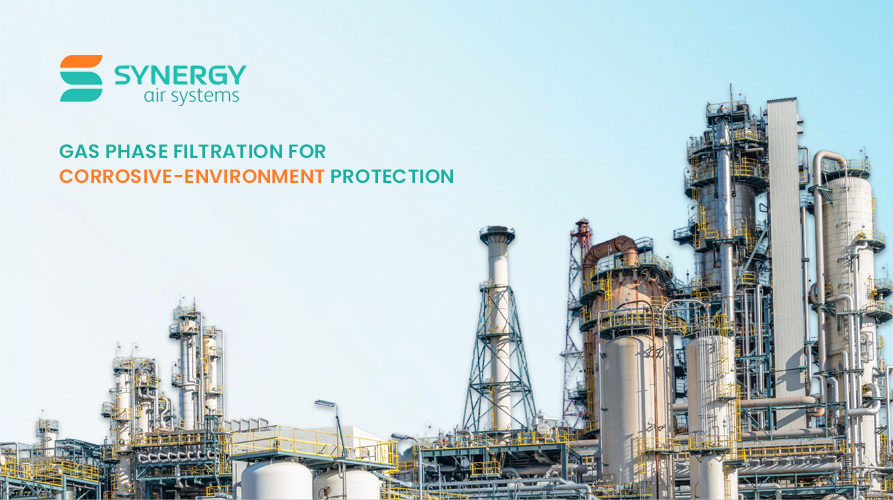
Petrochemical hubs like Baroda, Dahej, Bharuch, Wapi, and the Pune industrial corridor operate within dense industrial ecosystems. Emissions from refining, chemical processing, and surrounding industrial activity continuously introduce corrosive gases into the ambient air.
Commonly present contaminants include:
- Hydrogen Sulphide (H₂S)
- Sulfur Dioxide (SO₂)
- Nitrogen Oxides (NOx)
- Acidic and sulfur-based vapors
These gases disperse easily and infiltrate buildings through pressure imbalances, cable penetrations, and structural leakages. Even controlled indoor environments gradually accumulate these contaminants, creating conditions where corrosion can initiate and accelerate.
For facilities in such regions, gas phase filtration for petrochemical plants in Gujarat & Maharashtra is not driven by compliance alone they are driven by operational survival.
The Science Behind Electronic Corrosion in Petrochemical Facilities
Electronic corrosion is a chemical process, not a mechanical failure.
When corrosive gases come into contact with metallic surfaces inside electronic assemblies, they react to form oxides and conductive salts. This process affects:
- Printed Circuit Boards (PCBs)
- Edge connectors and sockets
- Terminal blocks
- Relay contacts and signal interfaces
Over time, these reactions lead to increased electrical resistance, intermittent connections, and unpredictable signal behavior. The early symptoms are subtle false alarms, minor data inconsistencies, or frequent recalibration needs. Left unchecked, these issues escalate into complete system failures.
Effective electronic corrosion control is therefore not about replacing damaged components it is about preventing corrosive gases from interacting with electronics in the first place.
Why Gaseous Contaminants Require Dedicated Gas Phase Filtration
One of the most common misconceptions in industrial facilities is treating all airborne contaminants the same way. In reality, gases behave very differently from particulates.
Gaseous contaminants:
- Remain invisible
- Travel freely with airflow
- Bypass physical barriers
- Continue reacting chemically over time
A chemical filtration system is specifically designed to address this challenge. Unlike particle-focused approaches, a gas phase air filter removes contaminants at the molecular level through adsorption.
This distinction is critical. Without a dedicated gas phase filtration strategy, corrosive gases remain present regardless of how clean the environment may appear visually.
How an Advanced Gas Phase Filtration System Functions
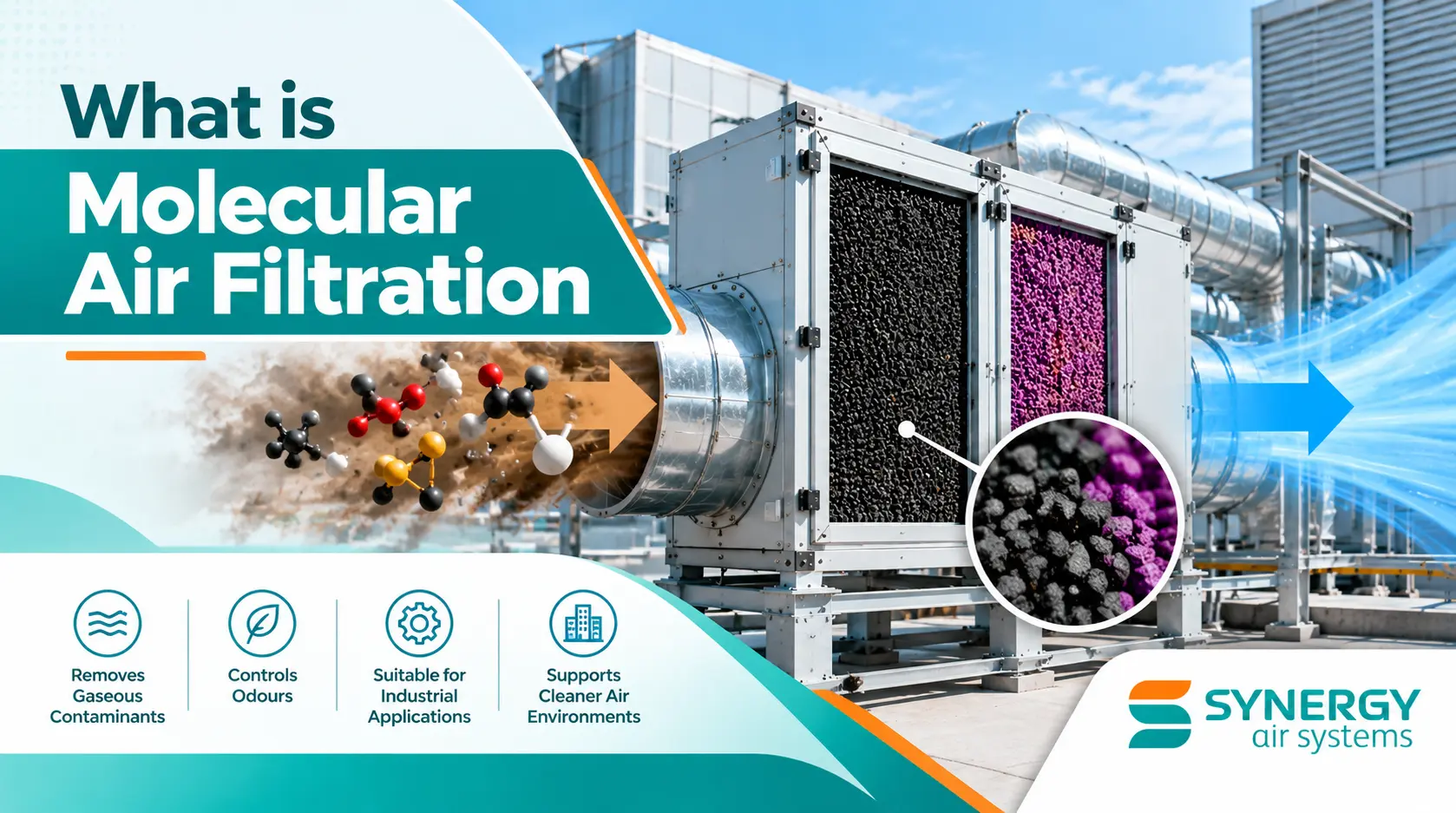
An advanced Gas Phase Filtration system operates on adsorption-based chemistry. As contaminated air passes through specialised filtration media, corrosive gas molecules are captured and neutralized.
The filtration media typically include:
- Impregnated activated carbon
- Chemically treated alumina
These materials are selected based on the specific gas profile present at the site. Once adsorbed, contaminants are permanently bound to the media, preventing further interaction with electronic components.
The process is continuous, stable, and highly effective in environments with persistent exposure to sulfur and acidic gases making gas phase filtration a dependable long-term solution for petrochemical facilities.
Industry Reality: Consequences of Ignoring Gas Phase Filtration
(A Real-World Learning)
In a large petrochemical facility located in Western India, repeated failures were reported in control room electronics within a relatively short operational period. Despite modern equipment and robust operational protocols, issues such as signal instability, corrosion on circuit boards, and frequent analyser drift persisted.
Multiple corrective actions were attempted, including equipment replacement and recalibration. However, the failures continued.
A detailed environmental assessment later identified the root cause: continuous exposure to corrosive gases inside enclosed electronic spaces, with no gas phase filtration system in place.
Once an appropriate Gas Phase Filtration system was installed, corrosion progression slowed significantly, equipment stability improved, and failure frequency reduced. The experience reinforced a crucial lesson preventing corrosion is far more effective than managing its consequences.
Designing Gas Phase Filtration Systems for Refineries in Gujarat & Maharashtra
Successful gas phase filtration is not achieved through standardisation. Each petrochemical site presents unique challenges based on its location, processes, and surrounding environment.
Key design considerations include:
- Identification of dominant corrosive gases
- Assessment of infiltration paths
- Selection of appropriate adsorption media
- Strategic placement of filtration units
- Planning for media life and replacement cycles
In regions with consistently high pollution loads, such as Gujarat and Maharashtra, these factors play a decisive role in achieving reliable corrosion control.
Why Synergy Air Systems for Gas Phase Filtration Solutions
We specialise in engineering advanced Gas Phase Filtration systems for petrochemical plants and refineries operating in high-corrosion environments. Our approach focuses on site-specific analysis, proven filtration media, and solutions designed to support long-term electronic corrosion control.
Connect with Synergy Air Systems to evaluate your facility’s corrosion exposure and implement a gas phase filtration strategy aligned with real operating conditions.
FAQs
What is Gas Phase Filtration in petrochemical plants?
Gas Phase Filtration is a chemical filtration system that removes corrosive gases from air to protect sensitive electronic equipment.
Why is Gas Phase Filtration important in Gujarat and Maharashtra?
High industrial activity in these regions leads to elevated corrosive gas levels, increasing electronic corrosion risk.
Which areas in refineries require gas phase air filters?
Control rooms, analyser shelters, electrical panels, and instrumentation areas.
How does Gas Phase Filtration support electronic corrosion control?
By adsorbing corrosive gases before they can react with electronic surfaces.
What are the consequences of not using Gas Phase Filtration?
Progressive corrosion, equipment instability, increased failures, and unplanned shutdowns.
Table of Contents
Toggle